
Properties around The Downs sit close to a large stretch of open, elevated parkland, and that proximity brings a genuine practical consequence when severe weather rolls through: less shelter from surrounding buildings or trees than a roof tucked away in a more built-up part of the city might enjoy on an ordinary street. High winds here tend to hit with fewer obstacles to slow them down first before reaching a roof directly. The effect can be noticeable even during storms that cause relatively little damage elsewhere in the city, since the difference in wind speed at this kind of exposed, elevated location can be considerable.
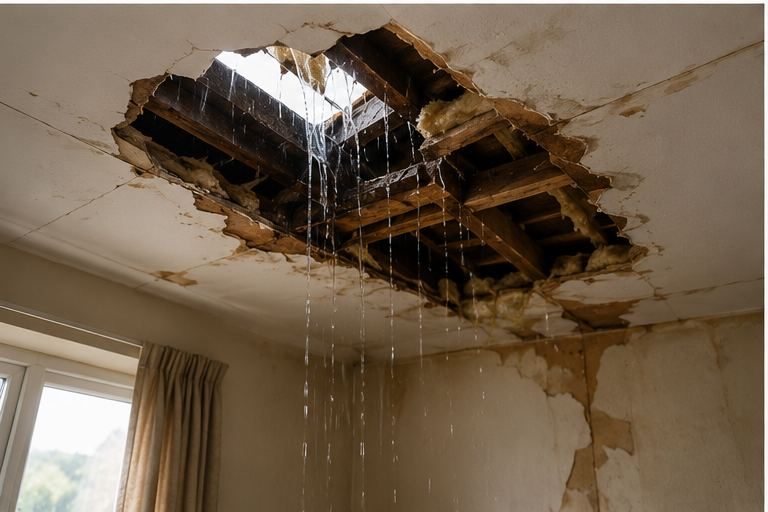
The most immediate effect is on roof tiles and slate, particularly along ridges, verges, and edges where wind pressure concentrates as it passes over a building at speed. Mortar bedding that's aged even slightly can give way under this kind of sustained pressure, and once a single tile lifts or lets go, neighbouring tiles are often left more vulnerable during the next gust that follows close behind it. Slate, being both heavier and more brittle than concrete tile, can also crack under this kind of sustained pressure without necessarily coming loose straight away, meaning damage isn't always obvious from the pattern of missing pieces alone.
Chimney stacks, common on the grand Victorian and Georgian terraces close to The Downs, take a disproportionate share of wind pressure simply by standing above the rest of the roofline on these tall properties. The lead flashing that seals them against the roof is a frequent casualty, lifting or splitting where it's already begun to weaken with age and years of exposure to the elements. Because these stacks often serve more than one fireplace or flue, a compromised seal at the base can affect several rooms below rather than just one, depending on how the internal flues are arranged.
Flat roof sections on rear extensions can suffer too, with high winds capable of lifting or splitting felt at the edges where it's fixed down, particularly on older coverings that have already had years of UV exposure to weaken them before the storm even arrives to finish the job started by the sun. A flat roof that's shown no sign of a problem for years can still fail during a single particularly exposed storm, simply because felt weakens gradually and a bad gust finds the point that's finally given way.
None of this means every property around The Downs will suffer damage in every storm, but the general exposure of the area does mean it's worth checking a roof over after any genuinely severe wind event, rather than assuming a lack of obvious problems means everything has come through unscathed underneath the surface.
If your property around The Downs has been affected by recent high winds, Brunel Roofing Bristol can carry out a thorough inspection and repair, with a free, no-obligation quote and emergency call-out available where needed straight away, day or night.
Need Emergency Roof Repairs in The Downs?
Every case is different — the fastest way to get an accurate answer is a quick chat with our team.