
High winds and heavy rain place a huge amount of strain on the tiles that make up a Hillfields roof, and it usually only takes one severe spell of weather to reveal any that were already marginal. Tiles can crack under wind pressure, slip out of position as the fixings holding them weaken, or be lifted and blown clear entirely, leaving the timber battens and felt underneath directly exposed to the elements.
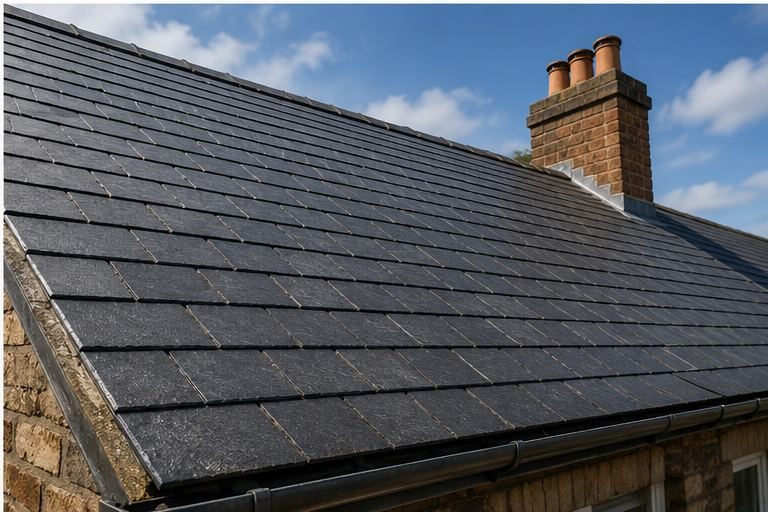
Cracked tiles are often the hardest for a homeowner to spot from ground level, since a hairline fracture can look perfectly sound from the pavement but will slowly let water seep through with every subsequent downpour. Slipped tiles are usually more visible, appearing as a gap or an area where the neat, overlapping pattern of the roof has been broken, and these are worth reporting even if no leak has appeared yet, because the exposed felt beneath is not designed to cope with prolonged wetting. In both cases, the damage tends to be easier to spot from a neighbouring upstairs window or across the street than from directly beneath the roof.
Missing tiles are the most urgent of the three, since they leave a direct route for wind-driven rain to reach the roof structure underneath. On older Hillfields properties in particular, a gap in the tiling can also allow water to track sideways along the battens before it eventually shows up as a stain well away from the original point of entry, which is why a roofer's inspection is more reliable than trying to work out the source from inside the loft alone. Even a single missing tile is worth treating as a priority rather than something to note down for a future appointment.
The type of tile involved also affects how repairs are approached. Concrete and clay tiles are usually replaced individually once a matching profile is sourced, while more decorative or older tile types on some Hillfields streets can occasionally need a closer match to avoid an uneven patch of colour or shape on an otherwise uniform roof slope. A competent roofer will assess this as part of the repair rather than fitting whatever is easiest to hand, taking the appearance of the finished roof into account alongside its watertightness.
Left unaddressed, even a small area of storm-damaged tiling tends to get worse rather than better, since wind and rain will keep working at the same weak point during every subsequent storm. Acting reasonably promptly after storm damage is noticed generally keeps the repair simple and contained, rather than allowing it to develop into a job involving damaged timber or insulation, both of which take considerably longer to put right and cost more as a result.
If your Hillfields property has visible tile damage after recent weather, Brunel Roofing Bristol can carry out a free inspection and provide a straightforward quote for the repair, backed by a 15-year guarantee on completed work.
Need Emergency Roof Repairs in Hillfields?
Every case is different — the fastest way to get an accurate answer is a quick chat with our team.