
Flashing is one of the smaller components on a roof, yet it does a disproportionate amount of the work of keeping a chimney watertight. Formed from lead or a similar flexible material and dressed into the joint between the chimney stack and the surrounding tiles, it's designed to move slightly with the building while sealing out rain, and storms are one of the more common reasons it fails.
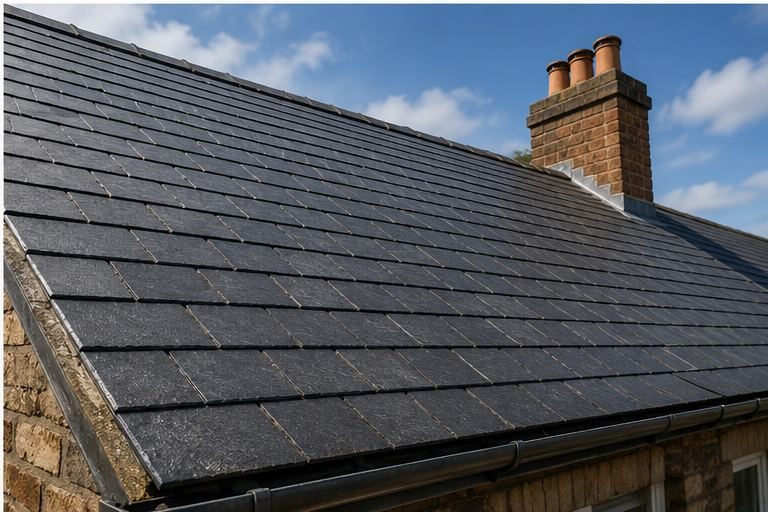
High winds can lift and crease flashing, work it loose from its fixings, or tear it away from the chimney entirely, while heavy rain can exploit even a small existing gap that might have gone unnoticed for months beforehand. Because the chimney is one of the tallest points on a roof, it also takes more of the wind's force during a storm than most other areas, which is part of why flashing failures here are so common across Kingsweston.
The tricky part of chimney flashing damage is that it doesn't always announce itself straight away. A leak here can travel down inside the chimney breast and appear as a damp patch on an internal wall or ceiling well away from the chimney itself, sometimes weeks after the storm that actually caused the damage, which makes it easy to misdiagnose without a proper roof-level inspection.
Repairing damaged flashing usually involves removing the affected section, checking the surrounding tiles and mortar joints for related damage, and dressing new flashing carefully into place so it sheds water correctly. Where the damage is more extensive, or the chimney stack itself has been affected, a wider repair may be needed rather than a like-for-like flashing replacement.
It's worth noting that chimney flashing problems can sometimes be confused with condensation, since both can produce a damp patch near a chimney breast without an obvious external cause. The two are usually easy to tell apart on closer inspection, condensation tends to be more localised and linked to poor ventilation rather than weather, but if you're unsure which you're dealing with, that's exactly the kind of question worth putting to a roofer rather than guessing. Chimneys that are no longer in use, sometimes capped or with a redundant flue, are not exempt from flashing problems either, since the flashing's job is purely to keep the roof watertight around the structure regardless of whether the chimney itself is still connected to a working fire or boiler flue inside the Kingsweston property. It's also worth being cautious of anyone offering to fix flashing from ground level without actually getting up to inspect it properly, since a rushed assessment from below can easily miss the true extent of the problem. A proper repair depends on someone getting eyes directly on the joint between the chimney and the tiles, checking both the flashing itself and the state of the surrounding pointing and tiles before any work is agreed.
If you've noticed a leak near a chimney breast in a Kingsweston home, particularly after recent bad weather, it's worth having it looked at before the next downpour rather than after. Brunel Roofing Bristol carries out chimney flashing repairs backed by a 15-year guarantee on completed work, with free inspections to confirm exactly what's needed.
Need Emergency Roof Repairs in Kingsweston?
Every case is different — the fastest way to get an accurate answer is a quick chat with our team.