
Flashing rarely gets much thought until it fails, but this thin strip of lead or similar material does a disproportionate amount of work on any roof, sealing the joints where a roof meets a chimney, a wall, a dormer, or another roof plane. These are exactly the points where two different surfaces meet at an angle, and they're inherently more vulnerable to water ingress than an unbroken run of tiles, which is why flashing failures are such a common cause of leaks after a storm hits a Ridgeway property, even one that otherwise looks completely undamaged.
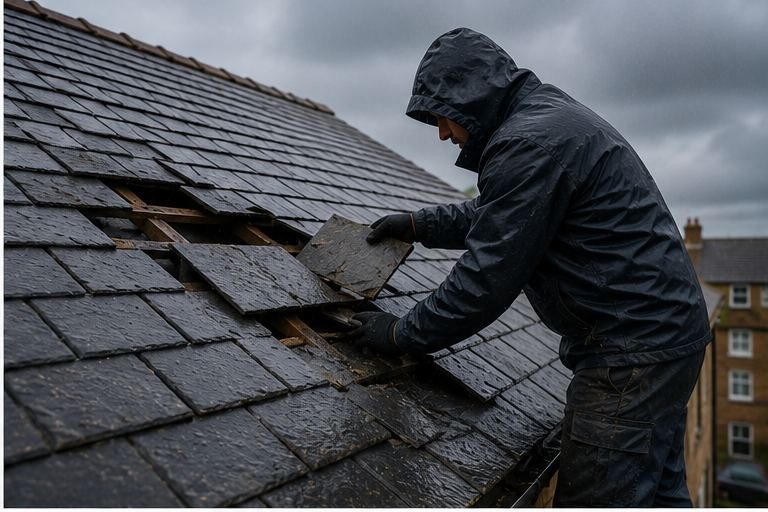
Wind causes flashing problems in a couple of distinct ways. Strong gusts can physically lift the edge of flashing that's begun to work loose from ageing mortar or sealant, creating a gap that wasn't there before and widening slightly with each subsequent storm. Debris carried on the wind, or branches coming into contact with the roof, can also dent, tear, or displace flashing outright, particularly around chimney bases and valley junctions where it sits more exposed to the worst of the weather passing over the roof. Even flashing that looks intact from a distance can have started to pull away from the brickwork behind it, a gap that widens slightly with each storm until it finally lets water through.
Once flashing has lifted or split, water finds its way behind it surprisingly easily, especially during the kind of driving, wind-blown rain that often follows a storm rather than falling straight down onto the roof. Because the flashing itself is hidden behind the visible roofline in many cases, this kind of damage can go unnoticed for some time, showing up only once damp patches appear on a ceiling or around a chimney breast inside the home, sometimes weeks after the actual storm has passed and been forgotten. By the time a stain appears on a bedroom ceiling, water may already have been finding its way in for some time, quietly affecting insulation and timber in between.
Repairing wind-damaged flashing properly means more than pressing it back into place. It typically involves re-dressing the lead or replacing the affected section entirely, re-pointing or resealing where it meets brickwork or render, and checking neighbouring sections that may have been weakened by the same storm even if they haven't failed yet and are showing no obvious sign of a problem. Skipping that wider check often means a second, avoidable leak turning up before very long, undoing the benefit of the first repair. A thorough repair also means checking that the replacement lead is dressed correctly into the brickwork joint rather than simply sealed over the top, since a poorly dressed repair can fail again within a season or two.
Chimney flashing and valley flashing tend to be the areas worth checking first after any high-wind event across Ridgeway, since both sit at particularly exposed junctions on the roof and are common culprits when a leak appears without any obviously missing tiles nearby to explain where the water is getting in from.
If you suspect wind has damaged the flashing on your roof, Brunel Roofing Bristol can inspect it and carry out a proper repair, with emergency call-out available where water is already getting in and a free quote provided for any further work identified once the roof has been properly assessed.
Need Emergency Roof Repairs in Ridgeway?
Every case is different — the fastest way to get an accurate answer is a quick chat with our team.