
Ridge tiles run along the very top of a roof, capping the point where two slopes meet, and this exposed position makes them one of the parts most likely to suffer during high winds. Across Filton, where roof shapes vary from simple gable ends to more complex hipped designs, ridge tiles are a fairly regular source of storm-related call-outs, particularly on roofs where the mortar bedding them in has aged. Hip roofs, with additional ridge lines running down towards each corner, generally have more of this vulnerable detail exposed to the weather than a simple gable roof.
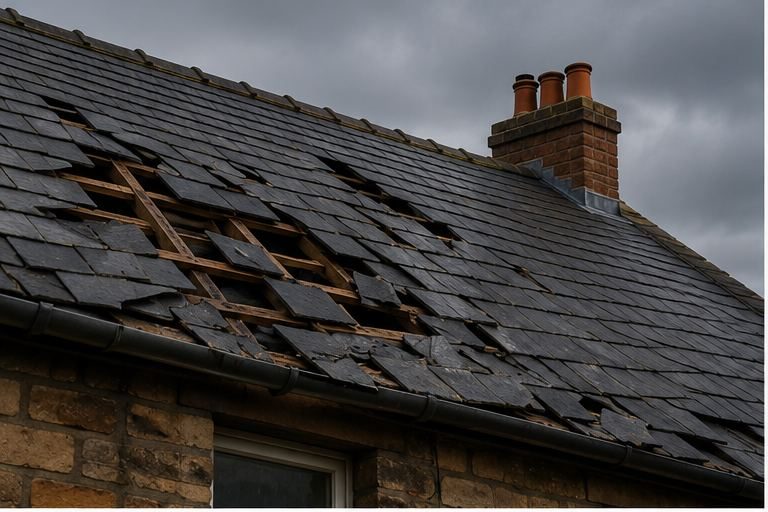
Traditionally, ridge tiles are bedded onto the roof using mortar, and it is this mortar joint, rather than the tiles themselves, that tends to fail first. Mortar becomes brittle over time, especially with repeated exposure to frost and rain, and once it starts to crack, individual ridge tiles can begin to rock in strong wind. A rocking tile is not always immediately obvious from the ground, but it is generally only a matter of time before a strong enough gust dislodges it completely, sometimes sending fragments of tile or mortar down into the guttering below.
A displaced ridge tile creates an obvious gap at the very peak of the roof, which is a particularly vulnerable spot for water ingress since it sits directly above the loft space with comparatively little else to stop rain getting in. Even where a ridge tile has only shifted rather than come away entirely, the seal beneath it is usually compromised enough to let water track in during subsequent rain, often well before the tile itself falls far enough to be obviously out of place.
Repairs typically involve re-bedding the affected ridge tiles using fresh mortar, having first checked that neighbouring tiles have not also been loosened by the same weather event, since wind damage rarely affects a single tile in isolation. On roofs where the mortar throughout the ridge line has clearly deteriorated, it is sometimes more sensible to address the whole ridge rather than just the section that has visibly failed, to avoid repeated call-outs for the same underlying issue.
A dry ridge system, using mechanically fixed components rather than mortar, is an alternative increasingly used on both repairs and new work, since it removes the reliance on a mortar joint altogether and tends to hold up better in future high winds. It is not the right choice for every property, particularly where matching the existing roof's appearance matters, but it is worth discussing where ridge damage has become a recurring problem.
If you have noticed a ridge tile out of place, or simply want peace of mind after recent windy weather, Brunel Roofing Bristol can inspect roofs across Filton and advise on the most suitable repair, with a free quote provided either way.
Need Emergency Roof Repairs in Filton?
Every case is different — the fastest way to get an accurate answer is a quick chat with our team.