
Cement has long been used as a quick way to bed ridge tiles, seal valleys and fill gaps around chimneys, and a good number of older roofs in Greenbank still carry evidence of this approach somewhere on them. It's an understandable method: cement is cheap, familiar to work with, and can be applied without needing to strip back the roof covering underneath. The problem is that it's also very good at hiding whatever lies beneath it, which isn't always reassuring once you know what's often found when it's finally removed and the roof is properly inspected. Many Greenbank homeowners are surprised to learn just how much a small area of cement can be concealing once a roofer starts to break it away carefully.
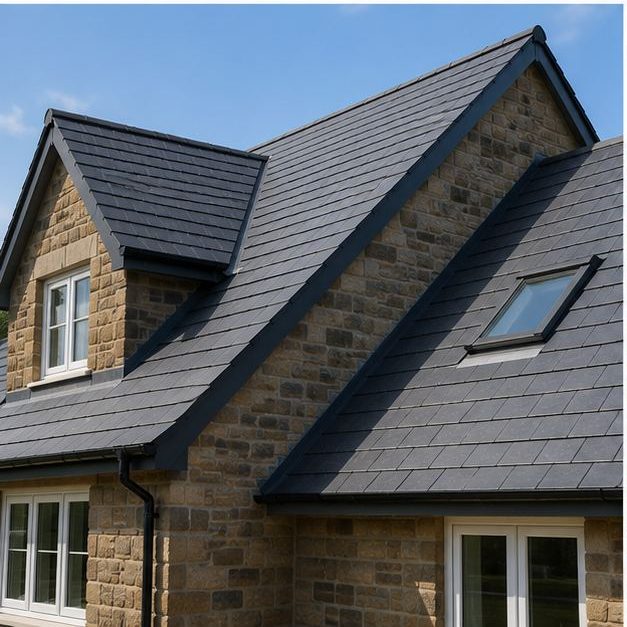
A thick bed of mortar around a ridge line, for example, can be concealing a cracked tile, a slipped slate, or a gap that was never properly closed in the first place. Because cement is rigid and roofs naturally move slightly with temperature changes and settling over the years, it tends to crack over time, letting water in behind it rather than keeping it firmly out. From the outside, a cement repair can look perfectly solid for years even while moisture is finding its way through the hairline cracks that have gradually formed across its surface. Because these cracks are often too fine to notice without close inspection, the damage they cause can go unaddressed for several years at a time.
Valleys treated with a cement fillet are a particular concern on older properties. This method was common on many Greenbank properties before modern valley systems became standard practice, and while it can look tidy from a distance, it often traps water against the roof timbers rather than channelling it away properly as intended. Once the cement starts to break down, which it inevitably does over enough years, the valley can hold moisture against the roof structure for long periods without any obvious sign visible at ground level.
The only truly reliable way to know what a cement repair is hiding is to remove it and inspect the roof structure underneath directly. This is one of the reasons a full re-roof is often more revealing, and ultimately more cost-effective, than continuing to work around old cement patches indefinitely. It gives a clear, honest picture of the tiles, battens and timber condition rather than guessing at what's concealed beneath years of accumulated mortar and repeated repair attempts.
If your Greenbank roof has visible cement repairs around the ridge, valleys or chimney, it's worth having them properly assessed rather than simply assumed to be sound because they've held up so far. Brunel Roofing Bristol can inspect what's underneath, explain clearly what we find, and offer a straightforward, free quote for putting things right properly rather than adding yet another layer on top.
Get a Free Quote for New Roof Installations in Greenbank
Every roof is different — the fastest way to get an accurate answer is a quick chat with our team.