
Gutters and roofs are closely connected systems, and in Shirehampton we regularly see cases where a gutter problem turns out to have started on the roof above it, not in the gutter itself. Moss is very often the culprit, and understanding how it ends up in the gutter helps explain why clearing the gutter alone rarely solves the problem for good.
As moss grows on roof tiles, it gradually thickens, and older clumps eventually dry out and loosen from the surface they were attached to. Wind and rain then carry these fragments down the roof slope, where they collect at the lowest point, which for most Shirehampton properties is the guttering running along the eaves.
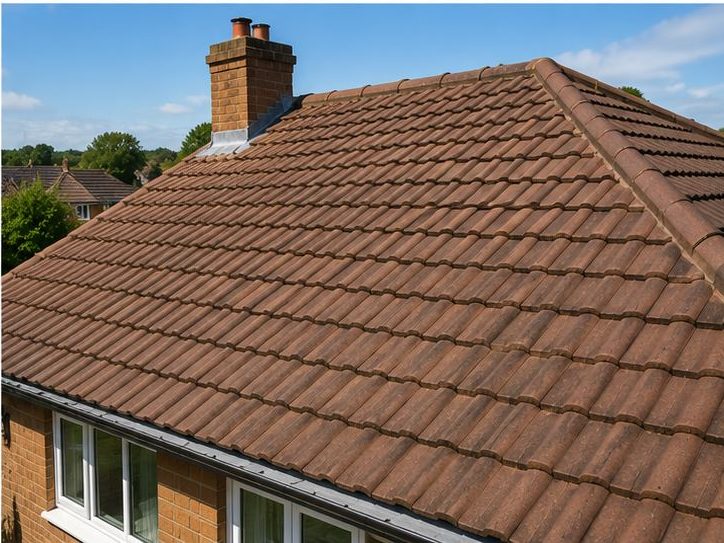
Once in the gutter, moss behaves differently to leaves or general dust. It absorbs and retains water, and mixed with grit and debris washed off the tiles, it forms a dense, compacted material that does not flow through the gutter system the way lighter debris does. Over time this builds up into a genuine blockage rather than a temporary obstruction that clears itself.
Shared gutter runs, common on Shirehampton's terraced and semi-detached streets, add a further wrinkle, since a blockage caused by moss shedding from one property's roof can sometimes affect drainage for a neighbouring section too, depending on how the guttering is configured. This is one more reason it is worth addressing moss at its source on the roof rather than only ever clearing the gutter itself once a blockage becomes apparent.
The knock-on effects can be significant. A gutter that cannot drain properly will overflow during heavy rain, sending water down exterior walls, pooling near the base of the property, or seeping in behind fascia boards where it can gradually damage roofline timber. On terraced and semi-detached Shirehampton properties in particular, overflow from a blocked section can also affect a shared or neighbouring gutter run.
Downpipes are not immune either. Smaller fragments of moss debris that pass the gutter can lodge further down the system, especially at bends, gradually narrowing the pipe until it too becomes restricted. At that point, even a gutter that looks clear from above may still not be draining as it should.
This is why we look at the roof and the guttering together rather than treating them as separate issues. Removing moss from the roof itself reduces the ongoing supply of material reaching the gutters, which is a far more lasting solution than simply clearing the gutters on their own and waiting for the same problem to recur.
It is also worth bearing in mind that blocked gutters caused by roof moss tend to recur on a predictable cycle if the underlying roof issue is never addressed, meaning a homeowner in Shirehampton might find themselves clearing the same gutter section every year without ever solving the actual cause. Tackling the roof itself breaks that repeating pattern rather than simply managing its consequences on a recurring basis. We would rather identify this kind of shared drainage issue early, while it is still a minor inconvenience, than have it develop into a dispute over responsibility once water has caused visible damage to brickwork or render on either property.
If gutters on your Shirehampton property have been overflowing or draining slowly, it is worth having the roof checked as part of the picture. Contact Brunel Roofing Bristol for an assessment of both.
Get a Free Quote for Roof Cleaning in Shirehampton
Every roof is different — the fastest way to get an accurate answer is a quick chat with our team.