
Shirehampton, like much of the Bristol area, sees its fair share of rain through the year, and that persistent damp climate is one of the main reasons local roofs are so prone to moss, algae, and lichen growth. Understanding the connection between wet weather and roof moss helps explain why some properties in the area seem to need cleaning more often than others.
Moss spores are airborne and land on almost every roof at some point, but they only establish and spread where conditions allow. The key ingredient is sustained moisture. A roof that dries out quickly after each rainfall gives spores very little chance to take hold, while a roof that stays damp for extended periods, whether from frequent rain, poor drainage, or shade, provides exactly the environment moss needs to grow.
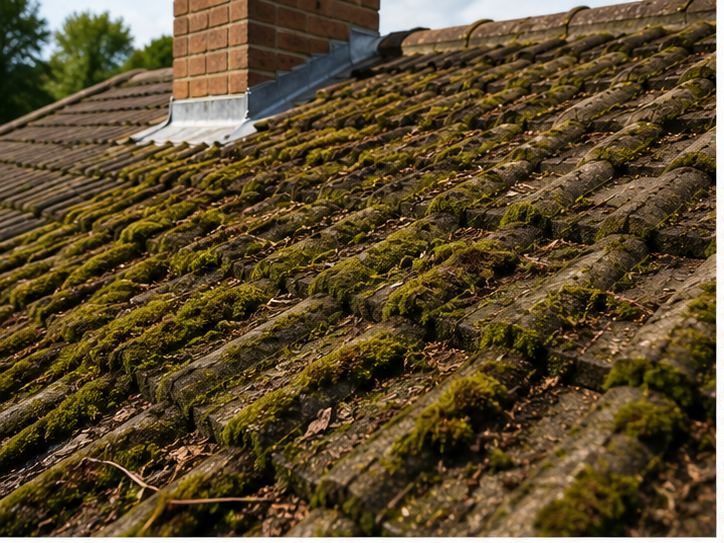
Shirehampton's proximity to the river and its generally mild, damp climate mean that roofs here often stay wetter for longer after rain than they might in a drier inland location. Combined with typical British weather patterns of frequent light rain rather than occasional heavy downpours followed by long dry spells, this creates near-ideal conditions for moss to establish gradually over successive seasons.
Wind direction plays a supporting role alongside rainfall itself. Prevailing weather arriving from the south-west, common across this part of Bristol, tends to drive rain more directly onto certain roof aspects than others, meaning two roofs of identical pitch and material can still end up with quite different moisture exposure depending purely on which way they face relative to that prevailing wind, something worth bearing in mind when comparing moss growth between neighbouring Shirehampton properties.
North-facing slopes and roofs shaded by neighbouring buildings or trees are particularly affected, since they lose the benefit of direct sun that would otherwise help dry the tiles between rain showers. On many Shirehampton streets, it is common to see one side of a roof noticeably greener than the other, a direct reflection of which slope gets more sun and which stays damp longest.
Poor drainage compounds the problem. Where gutters are already partially blocked or roof valleys do not clear water efficiently, moisture tends to sit against the tiles for longer after rainfall, giving moss an even better foothold. This creates something of a feedback loop, since established moss then holds further moisture against the roof surface and can itself contribute to blocked gutters over time.
None of this means moss growth is inevitable or untreatable, it simply means that in a naturally damp area like Shirehampton, roofs benefit from periodic professional attention rather than being left indefinitely. A gentle soft-wash clean removes existing growth without the damage that aggressive pressure washing can cause to tiles and mortar, giving the roof a genuine reset.
It is also worth noting that different roof orientations across Shirehampton will show quite different rates of growth even under the same weather conditions, simply because of how quickly each slope dries between rain events. Comparing a south-facing roof to a shaded north-facing one on the same street often makes this difference obvious, and it explains why some neighbours seem to need roof cleaning far more often than others despite experiencing identical rainfall.
If your Shirehampton roof has developed visible green or black staining, particularly on shaded slopes, it is worth having it assessed properly rather than assuming it is purely cosmetic. Get in touch with Brunel Roofing Bristol for an honest look and advice on the best way forward.
Get a Free Quote for Roof Cleaning in Shirehampton
Every roof is different — the fastest way to get an accurate answer is a quick chat with our team.