
Plenty of garages in Bishopsworth are still covered in the original felt roof, and after enough winters that felt tends to show its age: cracking, blistering, patches of moss, or a general dampness that seeps through during heavy rain. The good news is that replacing an old felt garage roof with EPDM rubber is a very common and generally straightforward upgrade, and it is one of the most requested jobs of this kind that we see.
The process starts with stripping the failed felt back to the timber decking underneath. This step matters more than it might seem, because it is the only real opportunity to see the true condition of the deck itself. Felt can hide a multitude of problems, and it is not unusual to find small areas of softened or water-damaged timber around the edges, at joints, or wherever the felt has previously failed. Any affected sections are cut out and replaced before the new roof goes down, rather than covering over a problem that would only resurface later.
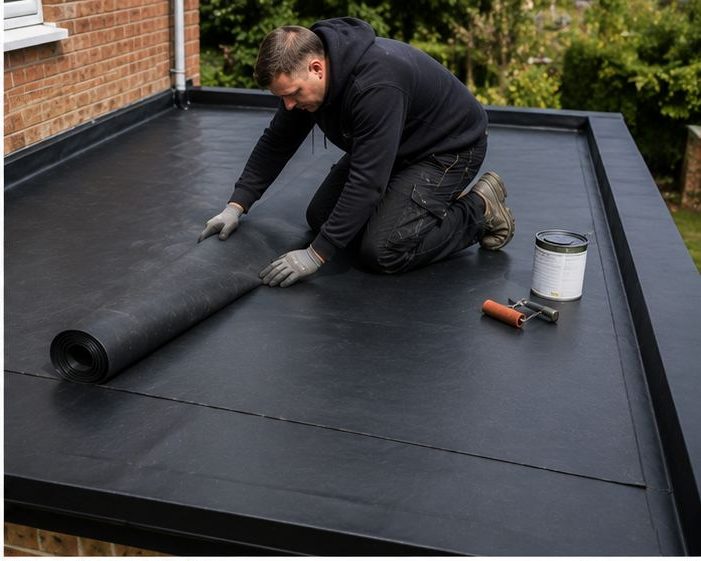
Once the deck is sound, EPDM is installed as a single sheet of rubber wherever the garage roof size allows, which is one of its real advantages over felt on a garage-sized roof. Most domestic garages are small enough that the whole roof can be covered without any joints at all, removing one of the most common weak points in a felt roof, where overlapping strips and torched-on seams are typically where leaks begin.
Compared with the felt it replaces, EPDM is generally more flexible and better able to cope with the movement that a garage roof experiences as it expands and contracts through the seasons. Felt tends to become brittle over time, particularly around edges and upstands, whereas EPDM rubber is designed to remain flexible for many years, which is part of why it is commonly guaranteed for significantly longer periods than typical felt roofing.
Detailing is still important on a garage conversion of this kind. The edges of the roof, the gutter line, and any features like a soil pipe or an old roof light all need to be finished properly in the new membrane, using trims and adhesives suited to EPDM rather than simply mimicking how the felt was fixed. Getting this right is what determines whether the new roof performs well for years or develops problems early.
Many Bishopsworth homeowners choose to replace a felt garage roof with EPDM at the same time as other work, such as replacing guttering or adding insulation if the garage is used as a workshop or storage space that benefits from being drier and less prone to condensation. It is a sensible time to deal with these things together while the roof is already stripped back.
It is also worth thinking about how the roof will be used going forward, not just how it looks once finished. A garage used to store a car benefits mainly from a reliably watertight covering, while one doubling as a workshop, gym or hobby space gains more from the added thermal comfort that insulation and a properly sealed EPDM buildup can provide. Discussing intended use at quotation stage helps ensure the finished roof actually suits how the space is lived in day to day, rather than simply matching what was there before.
If your garage roof in Bishopsworth is showing the usual signs of tired felt, whether that is visible cracking, ponding water, or damp patches inside, it is worth having it looked at before the covering fails completely and causes damage to whatever is stored underneath. Brunel Roofing Bristol can assess the existing felt and deck and talk you through what an EPDM replacement would involve for your specific garage.
Get a Free Quote for EPDM Roofing in Bishopsworth
Every roof is different — the fastest way to get an accurate answer is a quick chat with our team.