
Flat roof decking is the timber base that sits underneath whatever covering is on top, whether that is felt, GRP or EPDM, and its condition is genuinely more important to a roof's long-term performance than the covering itself. In Bishopsworth, where many flat roofs sit over extensions, garages and porches built at different points over the decades, decking condition varies enormously from one property to the next.
The most obvious warning sign from inside the property is a stain on the ceiling below the flat roof, particularly one that grows or reappears after heavy rain. This does not automatically mean the decking is rotten, but it does mean water has been getting through the covering for some time, and wherever that water has been sitting against timber, there is a real chance of softening or decay beginning underneath.
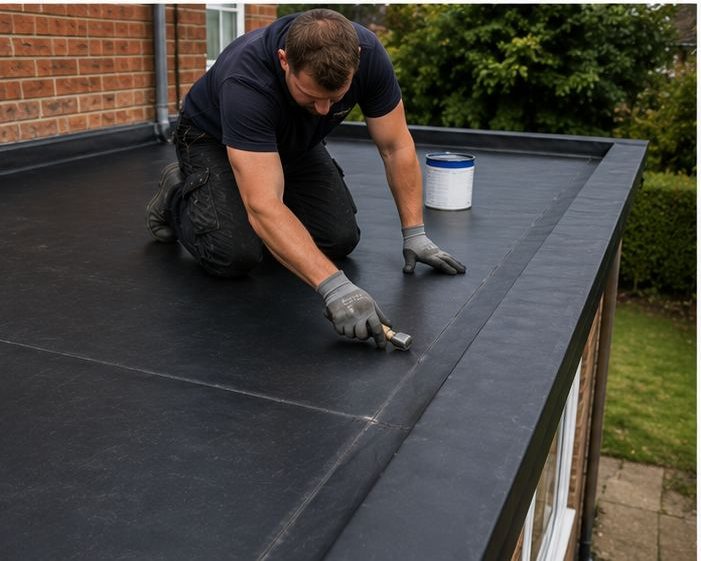
From outside, a flat roof surface that has developed soft, spongy patches, or areas that visibly dip or flex slightly when walked on, is a strong indicator of decking that has lost its structural integrity. A sound timber deck should feel firm and even underfoot. Any noticeable give, especially localised to one area rather than the whole roof, usually points to water having penetrated the covering above that specific spot over a long period.
Ponding water is another clue worth paying attention to. Flat roofs are meant to have a slight fall so that rainwater drains away rather than sitting on the surface, but roofs do settle and sag over time, particularly where the deck beneath has begun to weaken. A roof that holds standing water for more than a couple of days after rain, especially in a new or worsening spot, can be a sign that the deck underneath is starting to sag under prolonged moisture exposure.
Bubbling or blistering in the surface of an existing felt or GRP covering is also worth noting, since trapped moisture between the covering and the deck is often the underlying cause, and that moisture usually has to be coming from somewhere. It does not always mean the deck itself is rotten, but it is a sign that water is where it should not be, and that is exactly the condition that leads to decking problems if left unaddressed.
It is worth being honest that some signs of decking rot are simply not visible until the old covering is stripped back. This is one of the main reasons a proper roof replacement should always include an inspection of the deck once it is exposed, rather than assuming the timber underneath is fine just because the roof has not obviously failed yet. Hidden deterioration around edges, upstands and fixing points is common and easy to miss from a surface inspection alone.
A musty or damp smell noticeable from inside a room below a flat roof, even without a visible ceiling stain, can also be an early clue worth taking seriously. Timber that has begun to decay often gives off this smell well before any staining becomes obvious, particularly in a garage, porch or utility room where the space is not used constantly and small changes can go unnoticed for a while. Trusting that kind of subtle sign and having the roof checked sooner rather than later tends to keep any necessary repair smaller and more contained.
If you have noticed any of these signs on a Bishopsworth property, whether that is a ceiling stain, a soft patch underfoot, or standing water that will not clear, it is worth having the roof properly assessed rather than waiting for a small problem to become a larger and more expensive one. Brunel Roofing Bristol can inspect the roof, and if a covering does need to come off, will check the decking underneath and address any deterioration found before a new EPDM membrane goes on.
Get a Free Quote for EPDM Roofing in Bishopsworth
Every roof is different — the fastest way to get an accurate answer is a quick chat with our team.