
Concrete tiles are one of the most common choices we discuss with homeowners in Barton Hill, largely because the area's mix of older terraces and later-built housing means there's rarely a single 'correct' covering that suits every roof. Concrete offers a practical middle ground between cost and performance, which is why it comes up so often once repair bills start mounting on an ageing roof.
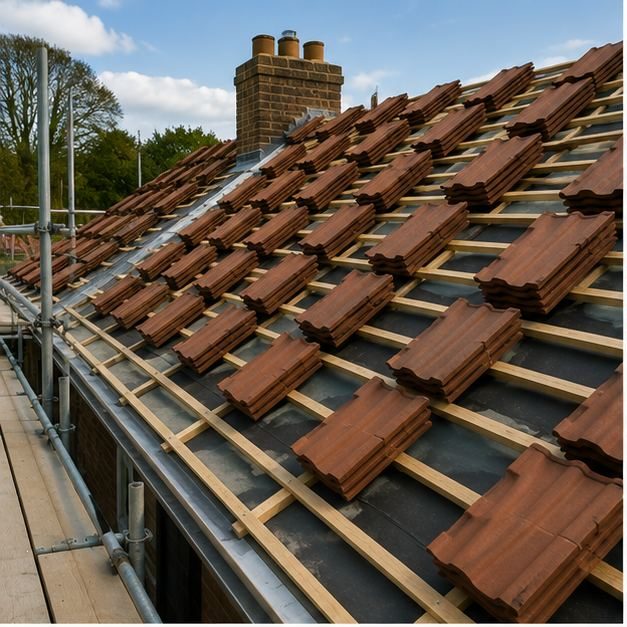
On the plus side, concrete tiles are considerably cheaper to buy and fit than natural slate or clay, which matters on larger roof areas typical of some of the semi-detached and extended properties around Barton Hill. They're also tough, resistant to impact damage, and available in profiles designed to echo the look of slate or plain clay tiles, so a concrete re-roof doesn't have to look out of place next to older neighbouring roofs. Manufacturers now offer a wide colour range too, including options that weather to a more muted, traditional finish over a few years, and lead times on standard concrete tile ranges tend to be shorter than on natural materials, which can matter if a roof needs attention quickly.
The downsides are worth knowing before you commit. Concrete tiles are noticeably heavier than slate, so on older roofs in Barton Hill the existing timber structure sometimes needs checking, and occasionally strengthening, to carry the extra load safely. They can also fade more visibly than slate over time, particularly on south-facing pitches that get more sun, and while individual tiles are cheap to replace, matching an older colour after a few years can be tricky as ranges are updated. They're also more porous than slate, which is rarely a practical problem but is a genuine material difference, and concrete's lifespan, while respectable, generally falls short of what a well-laid natural slate roof can achieve.
For most standard house types in Barton Hill, the balance tips in concrete's favour when budget is a primary concern and the roof isn't in a conservation setting with strict material requirements. Where a property sits within a more sensitive streetscape, or where matching an existing slate roof matters for kerb appeal, it's worth having a proper conversation about the alternatives before ordering materials.
It's also worth thinking about maintenance and lifespan side by side rather than in isolation. A concrete-tiled roof, properly laid with correct battening and adequate ventilation underneath, can still give several decades of reliable service, and individual damaged tiles are simple and cheap to swap out compared with slate or clay replacements. Interlocking concrete tile profiles, which cover more roof area per tile, can also reduce labour time on larger, simpler roof shapes, while plain, smaller-format concrete tiles suit steeper or more traditional-looking roofs where a closer match to older housing in the surrounding streets is wanted. Getting this choice of profile right at the outset makes a real difference to how the finished roof sits alongside its neighbours.
Brunel Roofing Bristol can talk you through samples, weight considerations, and realistic costs for your specific roof shape, so get in touch for a no-obligation quote and honest advice on whether concrete tiles are the right fit for your home.
Get a Free Quote for New Roof Installations in Barton Hill
Every roof is different — the fastest way to get an accurate answer is a quick chat with our team.