
Flashing rarely gets much attention because it's a small, unglamorous part of a roof, but it's one of the details most likely to cause problems if it's poorly installed. Around Barton Hill, where roofs often have chimneys, dormers, or abutments against neighbouring walls and extensions, correctly fitted lead flashing is doing a lot of quiet, essential work to keep water out, even though most homeowners never think about it until something goes wrong.
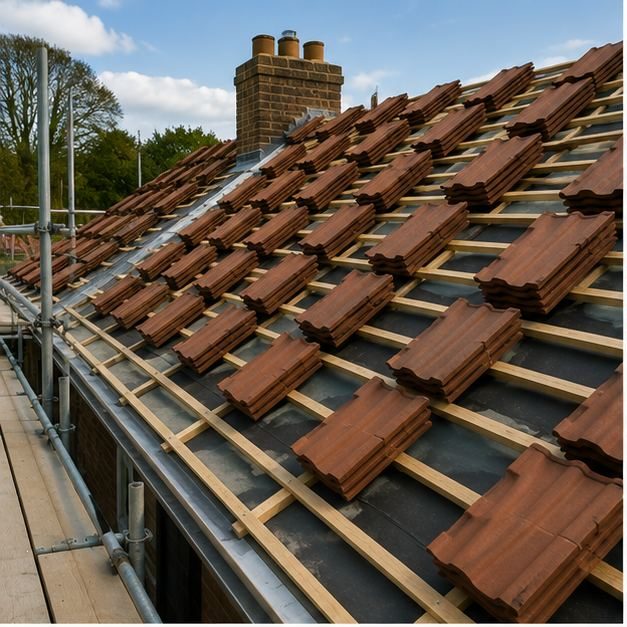
Flashing exists to seal the junctions where a roof meets something else, whether that's a chimney stack, a party wall, a dormer cheek, or a lower roof abutting a taller section of the house. Tiles and slates are good at shedding water down a clear, uninterrupted slope, but they can't seal a junction on their own, and this is precisely where many of the terraced and semi-detached roofs typical of Barton Hill have these junctions built into their design. Lead is used because it's durable, malleable enough to be dressed tightly into brickwork or masonry joints, and long-lasting when properly installed, often outlasting the roof covering itself if it's not damaged or disturbed.
The reason it matters so much on a new roof is that these junctions are exactly where leaks most commonly start, far more often than through the main tiled or slated area. A poorly dressed piece of flashing, one that's not tucked properly into a mortar joint or hasn't been lapped correctly with the roof covering, can let water track in almost invisibly, sometimes travelling some distance before it shows up as a damp patch inside the house. That makes it hard to trace and frustrating to fix after the event.
Getting flashing right takes experience rather than shortcuts. It means chasing lead properly into brickwork joints, using the correct code (thickness) of lead for the span involved, and allowing for the roof's movement over time so the flashing doesn't crack or lift. On a full re-roof in Barton Hill, replacing old flashing alongside the new covering is standard practice, since reusing old, weathered lead against new tiles or slates is a false economy.
There are lead alternatives on the market, and they occasionally have a place, but lead remains the preferred choice for most junctions because of how well it can be worked by hand into irregular brickwork and how long it lasts once properly dressed and fixed. Theft of lead has pushed some homeowners toward alternatives in recent years, and that's a reasonable conversation to have, but it shouldn't come at the expense of a properly formed, durable junction, since a cheaper material that fails early simply brings the leak risk straight back.
If you're having a roof replaced and want to be confident the details around chimneys and abutments are done properly, ask about the flashing specification as part of your quote. Brunel Roofing Bristol fits all flashing to a high standard as part of every installation, so contact us to discuss your roof and get a clear, honest price.
Get a Free Quote for New Roof Installations in Barton Hill
Every roof is different — the fastest way to get an accurate answer is a quick chat with our team.