
When a new roof is installed in Bedminster, one decision worth understanding is whether the ridge tiles will be bedded in traditional mortar or fitted using a dry ridge system. Both approaches are used across the area, but a dry ridge system brings some specific advantages that make it worth considering, particularly for homes that catch a lot of wind off the higher ground and open aspects found in parts of south Bristol.
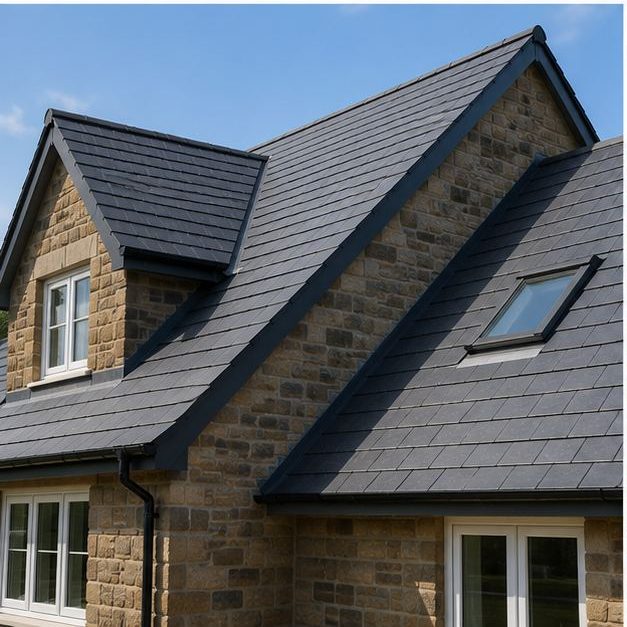
The main benefit is durability. Mortar is a rigid material fixed to a roof that naturally expands and contracts slightly with heat and cold, and over years this movement causes mortar joints to crack. Once cracked, wind can get underneath a ridge tile and, in exposed conditions, occasionally lift or dislodge it entirely, sometimes without any warning until a tile is found in the garden after a storm. A dry ridge system instead clips or mechanically fixes each tile to a batten, so the fixing does not depend on a bond that degrades over time in the same way.
Ventilation is a second, less obvious advantage. Dry ridge components typically include a permeable strip or vent that allows a small amount of airflow out of the roof space along the ridge line, helping moisture generated inside the house escape rather than condensing on the underside of the roof timbers. This can make a meaningful difference to the long-term condition of the roof structure, particularly in older Bedminster properties where loft ventilation was never really considered when the house was originally built over a century ago.
There is also a practical maintenance angle. A mortar ridge generally needs to be checked and occasionally repointed over the years as it weathers, whereas a correctly fitted dry ridge system needs very little attention once installed, which suits homeowners who would rather not think about their roof again for a long time after the scaffolding has come down.
Dry ridge systems have also become increasingly standard practice across the roofing industry, partly because they are designed and tested to resist specific wind uplift ratings, giving a more predictable level of performance than a hand-bedded mortar ridge, whose strength depends heavily on the skill and consistency of whoever mixed and laid it on the day. For homeowners comparing quotes, it is a reasonable question to ask which system is included as standard.
None of this means mortar bedding is wrong for every roof, and there are situations, including some conservation contexts, where it remains the preferred or expected approach. If you would like to know which system makes sense for your roof, Brunel Roofing Bristol can explain the options during a quote visit and fit whichever is right for your Bedminster property.
Get a Free Quote for New Roof Installations in Bedminster
Every roof is different — the fastest way to get an accurate answer is a quick chat with our team.