Flat-roofed extensions are a common sight across Horfield, whether it is a kitchen extension, a rear addition, or a single-storey side return, and EPDM rubber has become one of the most popular choices for covering them. If you are planning an extension or need to replace an existing flat roof, here is what is genuinely worth knowing about EPDM before work begins.
EPDM is a synthetic rubber membrane that is manufactured in large sheets and fully bonded to the roof deck, which means many extension roofs in Horfield can be covered with very few seams, sometimes none at all depending on the roof's overall size. Fewer joints translate directly into fewer potential weak points, which is a large part of why EPDM has become such a trusted option for extension roofs that need to perform reliably for years without constant attention.
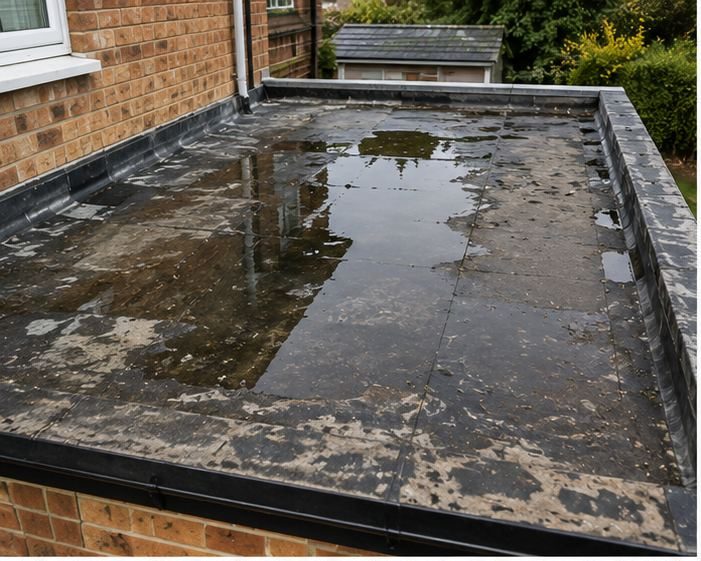
The material itself is highly flexible, which matters more than people often expect. Buildings move slightly with temperature changes and settlement, and a rigid covering can crack under that movement over time. EPDM's elasticity allows it to flex with the structure beneath it rather than fighting against it, which is particularly relevant on newer extensions where a certain amount of settlement is normal in the first year or two.
For a Horfield extension roof to perform well, though, the membrane is only one part of the equation. The roof deck needs to be sound, flat and properly fixed, the falls need to direct water towards an outlet or gutter rather than allowing it to pool, and any upstands where the roof meets the house wall or a parapet need careful detailing so that water cannot track behind the membrane. Getting these fundamentals right is just as important as the choice of covering itself.
Extensions often bring specific junction challenges that a straightforward roof does not, since they typically meet an existing wall on at least one side, and sometimes have rooflights, soil pipes, or other features built in from the start. Each of these needs to be dressed properly in EPDM as part of the original installation, because retrofitting good detailing around a poorly finished penetration is far more disruptive than getting it right the first time.
Insulation is also worth considering at the extension stage rather than as an afterthought. Building regulations set minimum thermal standards for new extension roofs, and incorporating the right insulation buildup beneath the EPDM membrane from the outset avoids the cost and disruption of upgrading it later.
Because every Horfield extension has its own shape, size and set of junctions, a generic description only goes so far. The right approach is to have the specific roof assessed so that the deck, falls, insulation and detailing can all be planned properly around it, rather than treating EPDM as a one-size-fits-all product.
If you are planning an extension in Horfield or need an existing flat roof brought up to standard, Brunel Roofing Bristol can talk through the options for your particular roof and provide a clear quotation based on what your project actually needs.
Get a Free Quote for EPDM Roofing in Horfield
Every roof is different — the fastest way to get an accurate answer is a quick chat with our team.