
Westbury-on-Trym is home to a wide mix of properties, from well-established period houses to newer extensions and garages, and flat roofs feature on a good number of them, whether on a rear extension, a dormer, a porch or an outbuilding. EPDM rubber roofing has become one of the most widely used solutions for these areas, and this guide sets out what homeowners in Westbury-on-Trym should understand before choosing it for their own property.
EPDM is a synthetic rubber membrane valued in the roofing trade for its flexibility and weather resistance. It is supplied in large sheets, which means many smaller flat roof areas, such as a garage or dormer roof, can be covered with very few joints. Fewer joints translate directly into fewer potential weak points, and the material's ability to flex with a building's natural movement helps it resist the cracking and splitting that can affect more rigid roofing systems over time.
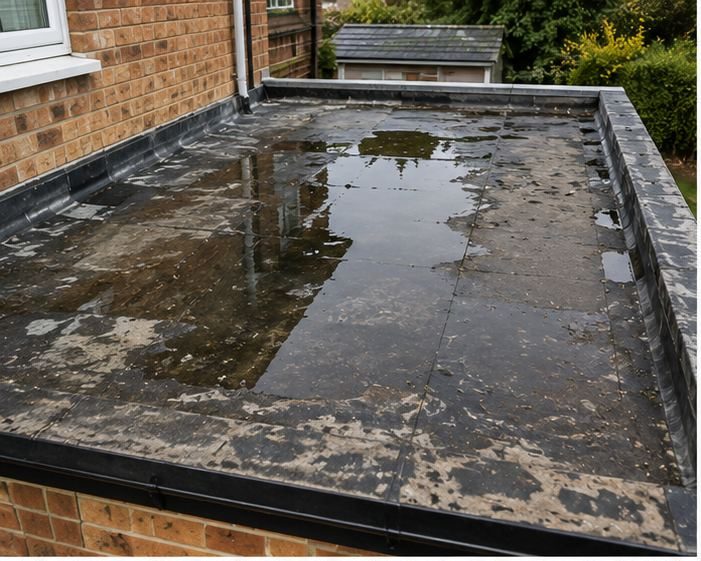
Good performance from an EPDM roof, though, depends on considerably more than the membrane itself. The condition of the roof deck underneath, the quality of the roof's drainage falls, and the detailing at edges, outlets and any junctions with walls or chimneys all play a major part in how well the finished roof performs. A high-quality membrane laid badly, or over a compromised deck, will never deliver the results that a correctly specified and installed system will.
For older Westbury-on-Trym properties in particular, it is not safe to assume that a flat roof automatically needs full replacement. Some existing roofs, especially those with sound decking and reasonable drainage, can be repaired or even overlaid rather than stripped completely, while others genuinely do need a full renewal. A proper assessment of the specific roof, rather than a blanket assumption either way, is the only way to know which approach is right and cost-effective.
When an old covering is removed as part of an EPDM installation, this is also the point at which the underlying timber decking can be properly inspected. Years of a failing felt or GRP covering can hide gradual deterioration in the deck beneath, and a careful contractor treats this stage as an important checkpoint, replacing any affected boarding before the new membrane goes down rather than covering up a problem that would resurface later.
EPDM is frequently compared with the two other common flat roofing materials, felt and GRP fibreglass. Generally speaking, EPDM is more durable and longer-lasting than traditional felt, and it avoids many of the seam and joint-related issues that can affect GRP installations over time, since large single-sheet EPDM roofs have comparatively few joins to potentially fail. Each material has its place, but for many Westbury-on-Trym flat roofs, EPDM offers a strong balance of durability, flexibility and relatively low maintenance.
Junctions where a new flat roof meets existing tiled or slated pitched roofing, or ties into brickwork and chimneys, deserve particular attention, since these are consistently the points where flat roofs are most likely to develop leaks if not properly detailed. A skilled installer forms these junctions carefully with appropriate flashings and bonded upstands rather than treating them as an afterthought.
Because every Westbury-on-Trym property is different, the right approach for your roof depends on its specific size, condition, age and the way it connects to the rest of the building. Brunel Roofing Bristol offers thorough, honest assessments and can talk through the options for your particular roof, backed by a 15-year guarantee and fully insured work.
Get a Free Quote for EPDM Roofing in Westbury-on-Trym
Every roof is different — the fastest way to get an accurate answer is a quick chat with our team.