
One of the trickiest parts of installing an EPDM flat roof, whether on an extension, dormer or porch, is not the flat area itself but the point where that flat roof meets an existing pitched roof covered in tiles or slate. This junction is consistently one of the most common places for flat roofs to develop leaks if it is not detailed properly, so understanding how a competent installer approaches it is worth knowing before any work begins.
The basic principle is that the EPDM membrane needs to be dressed up the pitched roof slope far enough to sit safely underneath a course of existing tiles or slates, so that any water running down the pitched roof passes over the top of the rubber membrane rather than behind it. This typically involves carefully lifting or removing a row of tiles or slates at the junction so the membrane can be tucked in properly before they are reinstated.
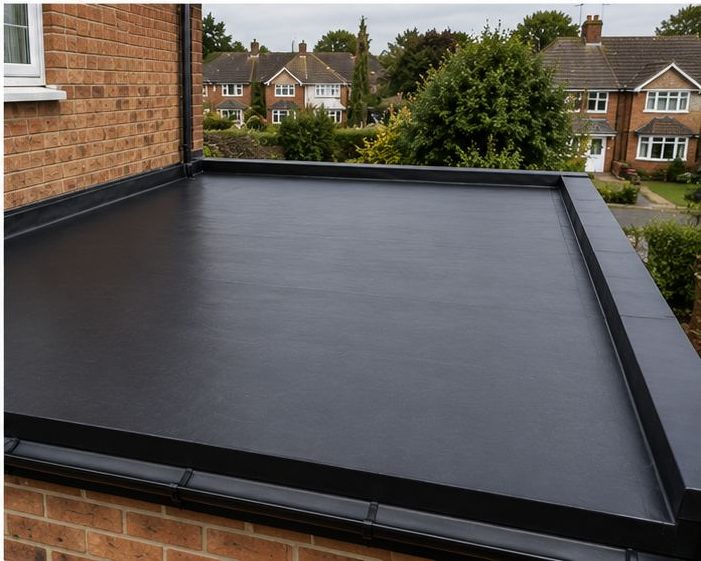
A soaker or step flashing is often used at this junction, particularly where the flat roof runs alongside a pitched slope rather than simply butting into the bottom of it. These flashings are formed to follow the profile of the tiles or slates and are bonded securely to the EPDM membrane, creating a continuous, watertight barrier at exactly the point where two different roofing materials meet.
Where the flat roof abuts a chimney or party wall rather than a sloped roof, a similar principle applies but with lead or an equivalent flashing dressed into the mortar joints of the brickwork, working alongside the EPDM upstand to prevent water tracking down behind the membrane. This kind of detail requires genuine skill with both flat and pitched roofing materials, since it sits at the boundary between the two trades.
Getting the height of the upstand right matters too. If the EPDM membrane is not taken high enough up the adjoining wall or pitched roof, water can be driven up and over the top edge during heavy wind-driven rain, which is a common weather pattern in this part of the South West. A properly formed upstand, well above the expected water level, avoids this problem even in poor weather.
This is also an area where inspecting the existing tiled or slated roof matters, since any existing damage, slipped tiles or deteriorated mortar near the junction can undermine even a well-installed EPDM detail. A thorough contractor checks the condition of the surrounding pitched roof at this junction, not just the flat roof area itself, and flags any repairs the pitched roof itself may need before the new membrane is dressed in around it.
Because this junction work involves working with both existing pitched roofing materials and the new EPDM membrane, it benefits from a contractor genuinely experienced in both, rather than one who specialises purely in flat roofing and treats the junction as a secondary detail.
Brunel Roofing Bristol has the roofing-wide experience to detail these junctions properly on Westbury-on-Trym properties, ensuring the point where a new EPDM roof meets existing tiles or slate is finished to last, backed by their 15-year guarantee.
Get a Free Quote for EPDM Roofing in Westbury-on-Trym
Every roof is different — the fastest way to get an accurate answer is a quick chat with our team.