When a Brislington homeowner is weighing up a new flat roof, the choice often comes down to EPDM rubber against traditional felt, and cost and lifespan are usually the two factors people care about most. It is worth comparing them honestly, since each material has genuine strengths worth understanding rather than treating one as simply superior in every respect.
On upfront cost, felt roofing has traditionally been seen as the cheaper option, and in some cases the materials cost can be lower for a like-for-like job. However, this comparison becomes less clear-cut once you factor in how often each material typically needs replacing. Since felt often needs replacing within roughly ten to fifteen years as a general guide, while EPDM is commonly guaranteed for twenty years or more, the total cost over a longer ownership period can end up favouring EPDM despite a potentially higher initial outlay, simply because the job needs doing less often.
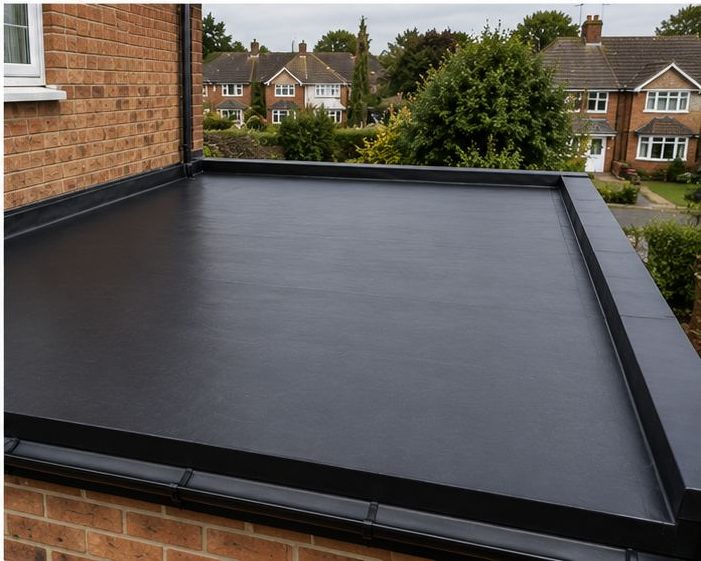
It is worth stressing that actual pricing for any specific Brislington roof depends on far more than the choice of material alone, including size, access, deck condition and detailing, so neither material has a fixed price that applies universally. The lifespan comparison above should be read as a general, honest guide to typical differences rather than a promise about costs on any particular job.
On performance, EPDM's single-sheet or minimal-seam installation is a genuine practical advantage over felt's overlapping strip construction, particularly on smaller roofs like garages and porches where the whole area can often be covered without any joints at all. Felt roofs, by contrast, rely on multiple seams bonded or torched together, and these joints are consistently where felt roofs are most likely to eventually develop problems.
Felt does have some advantages worth acknowledging, including that it is a very well-established, widely understood material that most roofers are familiar with, and it can be a reasonable choice for a roof where budget is the primary concern and a shorter expected lifespan is an accepted trade-off, such as an outbuilding not intended to last indefinitely.
EPDM's flexibility also gives it an edge in how it copes with roof movement and temperature swings over time. Felt tends to become brittle with age, particularly where it faces direct sun, and brittle material is more prone to cracking exactly where a roof needs to flex, such as at edges and upstands. EPDM is formulated to stay flexible for much longer, which is a meaningful part of why it typically lasts longer in practice, not just on paper.
Repairability is another point worth weighing into the comparison, since both materials can be patched, but the process tends to differ. EPDM repairs generally rely on tape or liquid rubber bonding cleanly to the existing membrane, whereas felt repairs often involve reheating and re-bonding material that may already be somewhat brittle, which can be a less forgiving process on an older felt roof compared with patching a comparatively young EPDM one.
For most Brislington homeowners planning to stay in their property for a good number of years, EPDM tends to represent the stronger long-term choice, balancing a typically longer working life against felt's lower profile and familiarity. The right choice for your specific roof still depends on its size, condition and your own priorities, which is best worked through with a proper assessment. Brunel Roofing Bristol can talk through both options for your roof and provide a quotation for whichever route suits you best.
Get a Free Quote for EPDM Roofing in Brislington
Every roof is different — the fastest way to get an accurate answer is a quick chat with our team.