
Drainage is one of the least glamorous parts of a flat roof, but it is arguably one of the most important, and it is a factor that determines how well any covering, EPDM included, will perform over time. For Brislington homeowners thinking about a flat roof, whether new or being replaced, understanding why drainage matters so much is worth the few minutes it takes.
A flat roof is never actually perfectly flat. It is built with a slight fall, or gradient, so that rainwater is directed towards gutters or outlets rather than sitting on the surface. This fall might only be a matter of a few degrees, but it is essential, because a roof covering, however good the material, is not designed to hold standing water indefinitely without consequences.
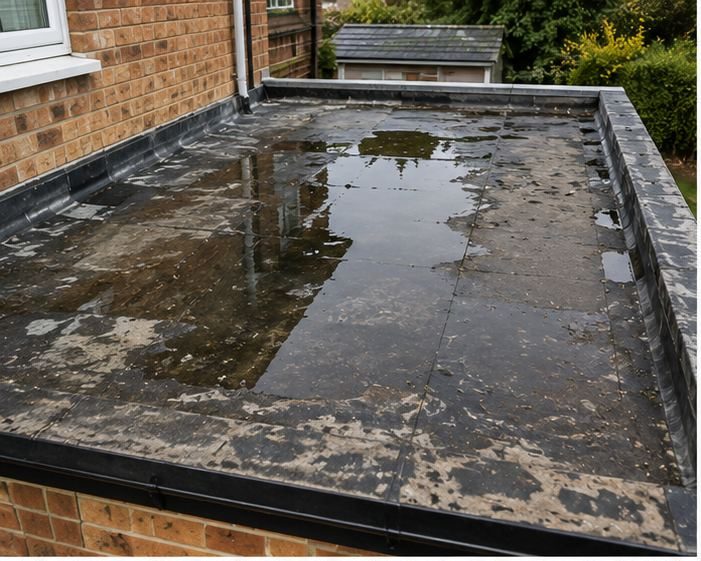
Where falls are inadequate, whether due to the original construction or the roof settling and sagging slightly over time, water can pond on the surface for extended periods after rain. Standing water adds unnecessary weight to the roof structure, and prolonged exposure to sitting water can accelerate wear on the membrane at that specific spot, particularly around any seams or detailing within the affected area.
Outlets and gutters need to be correctly sized and positioned for the roof they serve, and they need to be kept clear to actually do their job. A flat roof with a perfectly good fall can still suffer from ponding and eventual leaks if the outlet at the low point becomes blocked with leaves or debris, since the water simply has nowhere to go once it reaches that point.
The junctions where a flat roof meets a wall, a chimney, or a change in roof level are also closely tied to drainage performance, since water flowing across the roof surface has to be correctly channelled around these features rather than pooling against them. Poor detailing at these points is a common source of leaks that trace back to drainage design rather than a fault with the membrane itself.
When an EPDM roof is properly installed, drainage is considered as part of the overall design, not an afterthought, with falls, outlets and detailing all working together to move water off the roof efficiently. This is one of the reasons a proper assessment before installation matters, since simply replacing an old covering without reviewing the roof's falls risks repeating the same drainage problems under a newer surface.
Seasonal debris is worth a specific mention for Brislington properties near mature trees or hedging, since leaves, moss and general organic build-up around outlets tend to increase through autumn and can quietly reduce a roof's drainage capacity if left unchecked over a longer period. A few minutes clearing an outlet before the wetter months set in is a small task that can meaningfully reduce the risk of standing water building up when it matters most, and it costs nothing beyond a bit of time on a dry afternoon.
If you have noticed standing water on a Brislington flat roof, or a leak that seems to correspond with a particular low spot or blocked outlet, it is worth having the drainage itself assessed rather than assuming the covering alone is at fault. Brunel Roofing Bristol can look at how well a roof is currently draining and advise on what, if anything, needs correcting alongside any EPDM installation or repair work.
Get a Free Quote for EPDM Roofing in Brislington
Every roof is different — the fastest way to get an accurate answer is a quick chat with our team.