
For Bedminster homeowners researching flat roof coverings beyond traditional felt, the comparison often narrows down to two more modern options: EPDM rubber membrane and GRP, also known as fibreglass roofing. Both have genuine advantages over old-style felt, but they are quite different materials with different practical characteristics worth understanding before choosing between them.
GRP roofing is applied as a liquid resin reinforced with glass fibre matting, which cures on site to form a rigid, seamless surface. Its rigidity is often presented as a strength, since there are no membrane joints to fail once it has cured. In practice, though, that rigidity means GRP has little tolerance for the natural movement of a timber roof deck as it expands and contracts with temperature changes, and this movement can eventually lead to cracking or crazing in the fibreglass surface, particularly around joints in the underlying decking.
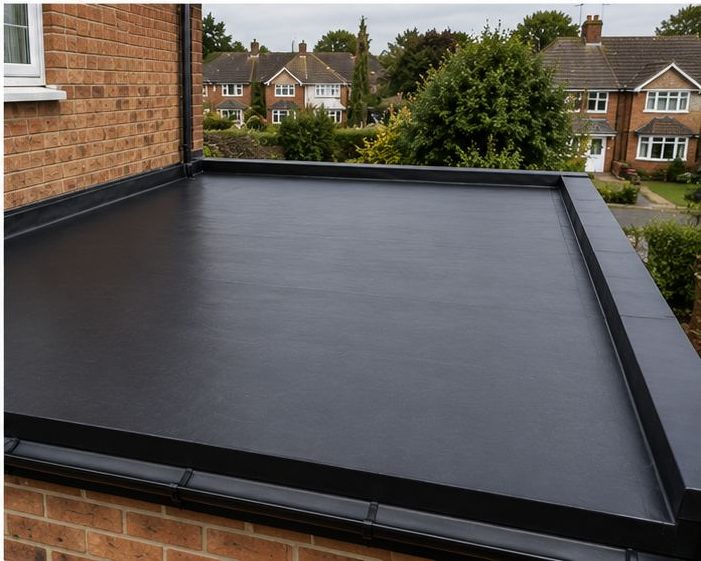
EPDM, by contrast, is a flexible synthetic rubber membrane that is designed to move with the roof structure beneath it rather than resist that movement. This flexibility is one of its core advantages for Bedminster's mix of older terraced properties and newer extensions, since timber decks naturally flex slightly over the seasons, and a membrane that can accommodate this without cracking tends to hold its watertight performance for longer.
Installation methods differ significantly too. GRP requires very specific weather conditions to cure properly, generally dry weather within a certain temperature range, which can make scheduling installation trickier depending on the time of year. EPDM installation is less weather-dependent in this regard, since it is a pre-manufactured membrane that is rolled out, bonded, and dressed on site rather than mixed and cured in place.
When it comes to seams and joints, EPDM again tends to have an edge for a typical domestic roof, since large sheets can often cover an entire extension or garage roof with very few, if any, joins. GRP, being applied in sections and around complex detailing, can develop more potential stress points at corners and upstands over time, which is where cracking most commonly starts to appear.
Repair characteristics differ as well. Damage to an EPDM membrane can usually be patched relatively straightforwardly using compatible materials. Repairing GRP typically involves grinding back the damaged area and reapplying resin and matting, which is a more involved process and one that depends heavily on suitable weather conditions to cure correctly.
Neither material is universally the wrong choice, and there are situations where GRP suits a particular roof shape or homeowner preference well. For most flat roofs across Bedminster, however, EPDM's flexibility, fewer seams, and more straightforward repair process make it the option more commonly recommended by roofing professionals.
Appearance is a minor but occasionally relevant factor too. GRP is applied as a smooth, glossy surface and can be finished in a range of colours, while EPDM has a matte, dark rubber finish. For most flat roofs, largely hidden from street view, this makes little practical difference, but it is occasionally a consideration where part of the roof is visible from a window or neighbouring property.
If you are weighing up EPDM against GRP for your own Bedminster property, it is worth having your specific roof assessed rather than deciding on general comparisons alone. Brunel Roofing Bristol can talk through both options in the context of your roof and provide a quotation for whichever suits your home best.
Get a Free Quote for EPDM Roofing in Bedminster
Every roof is different — the fastest way to get an accurate answer is a quick chat with our team.