
Parapet walls are a common feature on older Redcliffe buildings, particularly on the Georgian and Victorian terraces and converted properties that make up much of the area. These low walls that rise above the roofline were originally built for various architectural and practical reasons, but for anyone dealing with an EPDM flat roof today, they represent one of the more important junctions to get right during installation.
A parapet wall creates what is essentially an upstand around some or all of the roof's perimeter, and the membrane needs to be dressed up and secured against that vertical face rather than simply terminating flat at an edge trim as it might on a more straightforward roof. Getting this junction wrong is one of the more common sources of leaks on parapet roofs, so it deserves proper attention during any EPDM installation in Redcliffe.
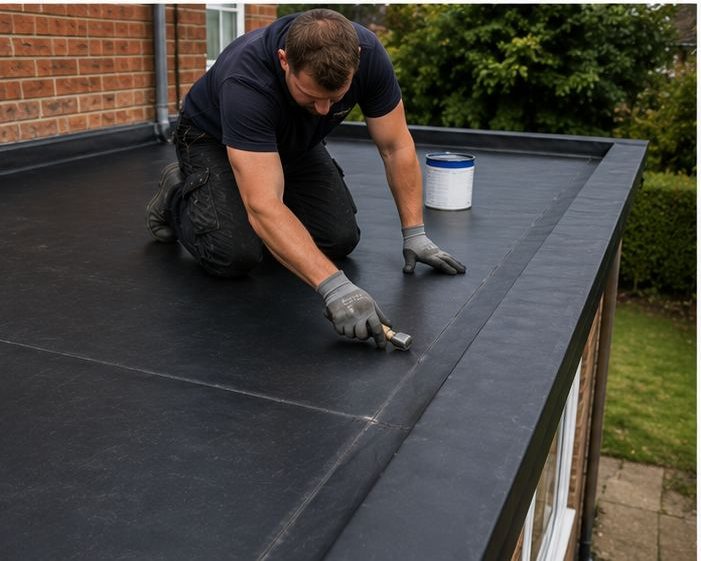
The typical approach is to run the EPDM membrane up the face of the parapet to a suitable height above the roof surface, well beyond where standing water could ever realistically reach even in heavy rain, and then secure and terminate it against the wall using a combination of adhesive, a mechanical termination bar, and appropriate weatherproofing at the top edge. This gives a continuous, watertight junction rather than relying on a simple butt joint that could work loose over time.
Where the top of the parapet itself is capped, whether in stone, brick, or a separate coping, the detailing needs to account for how water moving down that capping interacts with the membrane below. A poorly considered junction at this point can allow water to track behind the membrane rather than over it, which defeats the purpose of the upstand in the first place.
Older Redcliffe parapets sometimes have their own quirks, such as slightly uneven brickwork, previous repairs, or render that has been patched over the years, and a good installer needs to work with what is actually there rather than assuming a perfectly true, modern wall face. This is one of the areas where experience with period properties genuinely shows in the quality of the finished detail.
It is also worth checking, as part of any parapet roof assessment, whether the wall itself shows signs of past water penetration, such as damp staining or deteriorating pointing, since this can indicate the previous roof covering was not properly sealed against it. Addressing the wall's condition alongside the new EPDM installation, rather than covering over an existing problem, gives a far more durable result.
Done properly, an EPDM membrane dressed correctly against a parapet wall should give a clean, genuinely watertight junction that lasts for many years without requiring ongoing attention, which is exactly what you want on a roof detail that is difficult to inspect casually from ground level.
If you have a parapet roof in Redcliffe and want the junction properly assessed or re-detailed as part of an EPDM installation, Brunel Roofing Bristol can inspect the existing wall and roof and advise on the right approach for your property.
Get a Free Quote for EPDM Roofing in Redcliffe
Every roof is different — the fastest way to get an accurate answer is a quick chat with our team.