Larger flat roofs in Sneyd Park frequently need more than one drainage outlet to manage rainfall effectively, and getting this right is one of the less visible but genuinely important parts of a good EPDM installation. Handled properly, multiple outlets work together to clear water quickly; handled poorly, they can leave a roof prone to pooling and eventual leaks.
The starting point is understanding how water actually moves across the roof. Before any outlets are positioned or detailed, the roof's falls need to be assessed so that every part of the surface has a clear route to at least one outlet, without any low points left stranded between drainage points where water could otherwise collect.
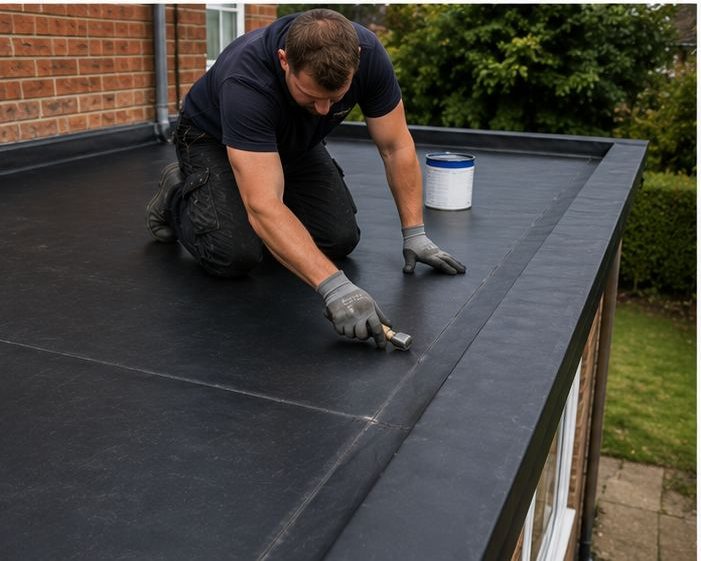
Where a roof has been extended or altered over the years, as is common on larger Sneyd Park properties, it's not unusual to find that the original drainage layout no longer matches the current roof shape. Part of assessing a roof for EPDM installation involves checking whether existing outlet positions still make sense for the roof as it stands today, rather than simply repeating a historic arrangement.
On a roof with several sections or levels, as is common on larger Sneyd Park properties, each distinct area may need its own dedicated outlet rather than relying on water travelling a long distance across the membrane to reach a single drainage point. This reduces the volume of water any one outlet has to cope with during heavy rainfall and lowers the risk of overwhelming the system.
Each outlet itself needs to be carefully detailed into the EPDM membrane using a purpose-made outlet fitting, bonded securely so there's no gap for water to work its way underneath. This is a detail where quality of workmanship really shows, since a poorly sealed outlet is one of the more common places a flat roof can develop a leak over time.
It's also important that outlets are sized appropriately for the area of roof they serve and for the volume of water likely to reach them. An outlet that's technically working but undersized for a large catchment area can still allow water to back up during a heavy downpour, so this needs to be calculated properly rather than assumed.
Ongoing maintenance matters just as much as the initial installation. Multiple outlets on a Sneyd Park roof mean multiple points that can potentially collect leaves, moss and debris over time, so periodic checks and clearing are worth building into a maintenance routine, particularly for roofs near mature trees, which are common in this area.
Overflow provision is another detail worth planning for on a roof with multiple outlets, giving water a secondary route off the roof if the primary outlets ever become temporarily blocked or overwhelmed during an unusually heavy downpour. This kind of built-in redundancy is a relatively small addition at installation stage but adds real peace of mind on a larger Sneyd Park roof where the consequences of overflow reaching the wrong place can be significant.
If you're planning EPDM roofing for a larger property in Sneyd Park with multiple drainage points to consider, it's worth having the whole system designed and installed by someone experienced in this kind of detailing. Brunel Roofing Bristol can assess your roof's falls and drainage needs and recommend an outlet layout that will genuinely keep water moving off the roof.
Get a Free Quote for EPDM Roofing in Sneyd Park
Every roof is different — the fastest way to get an accurate answer is a quick chat with our team.