
Portishead sits right on the edge of the Bristol Channel, and that coastal position brings a particular kind of weather that has a direct effect on how quickly moss establishes itself on local roofs. Understanding this link between damp weather and moss growth helps explain why some properties in the town need cleaning more often than others.
Moisture is the single biggest factor moss needs to spread. Portishead's proximity to the estuary means the air here tends to carry more humidity than areas further inland, and mist or light drizzle rolling in off the water can keep roof surfaces damp even on days when it is not properly raining. That persistent low-level moisture is exactly what moss spores need to germinate and take hold on tiles or slates.
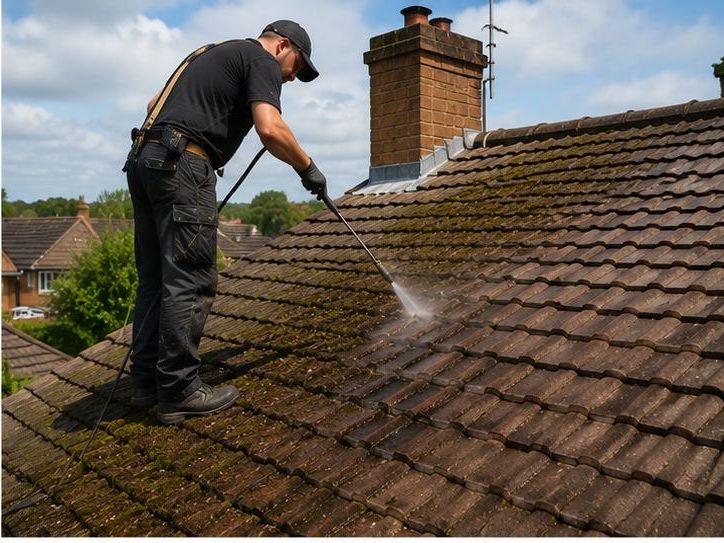
Prevailing winds off the Channel also bring frequent spells of rain through the autumn and winter months, and because Portishead's weather pattern rarely allows roofs to dry out completely for long stretches during these seasons, moss has an extended window each year in which to grow largely undisturbed.
Shaded roof slopes are hit hardest by this pattern. A north-facing pitch, or one tucked behind taller neighbouring properties, can stay damp for days after rainfall while a sunnier south-facing slope on the same house dries out much faster. This is why it is common to see heavier moss growth on one side of a Portishead roof and comparatively little on the other.
Cooler, damper conditions through autumn and winter tend to be when moss growth accelerates most noticeably, while drier spells in summer slow it down, though rarely stop it entirely given the local climate. Freeze-thaw cycles in colder snaps can also cause trapped moisture within moss mats to expand, which can put additional strain on the tiles beneath, occasionally contributing to small cracks that would not otherwise have developed on a dry, well-ventilated roof surface.
Homes closer to the water in Portishead, including those around the marina, can be especially exposed to this combination of humidity and salt-laden air, which affects not only how quickly moss establishes but also how it interacts with roofing materials and metalwork over the years. Properties further inland, on higher or more open ground, sometimes fare slightly better simply through greater exposure to drying winds, though few roofs in the town escape the effects of the local climate entirely.
Over time, roofs that stay damp for long periods are more prone to moss building into thick, spongy mats rather than just surface staining, and these mats hold water against the tile surface for far longer than bare, clean tiles would.
Good roof ventilation can help offset some of this dampness, allowing a small amount of airflow beneath the tiles that helps the underside of the roof covering dry out even when the surface above stays wet for extended periods. Many older Portishead properties were not built with this in mind to the same degree as modern developments, which is one more reason why keeping the outer surface as free from moss as possible matters, since a bare tile sheds water far more effectively than one carrying a waterlogged mat of growth.
If your Portishead property seems to collect more than its fair share of moss thanks to the local weather, Brunel Roofing Bristol can take a proper look at how your roof is affected and advise on a gentle, appropriate cleaning approach to get it back in good order.
Get a Free Quote for Roof Cleaning in Portishead
Every roof is different — the fastest way to get an accurate answer is a quick chat with our team.