
Walk along many of the residential streets in Portishead, from the older properties near the High Street to the newer developments closer to the marina, and you will spot roofs with patches of green, black or orange growth clinging to the tiles. This is a very common issue in the area, and it comes down to a combination of Portishead's coastal position, its climate and the way many roofs are built and orientated.
Moss thrives in damp, shaded conditions, and Portishead's location on the edge of the Severn Estuary means the town experiences a good deal of moisture in the air, along with regular rainfall carried in off the water. Roof slopes that face away from direct sun, particularly north or east-facing pitches, stay damp for longer after rain, giving spores the ideal environment to establish and spread across tiles or slates.
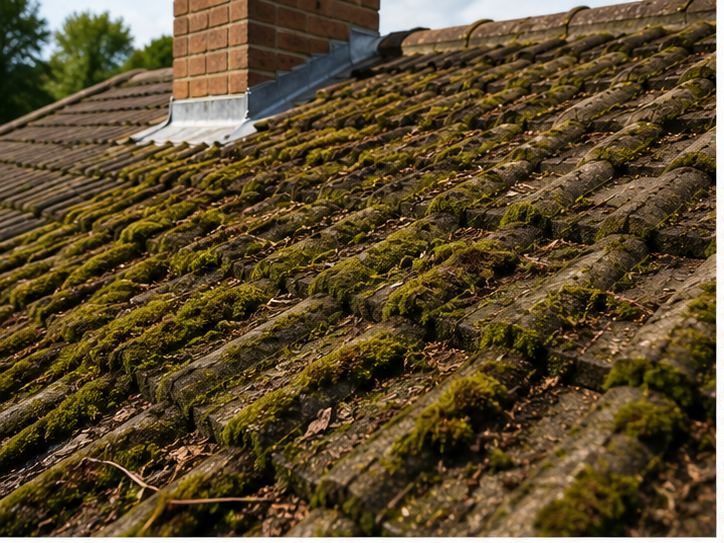
Algae growth, often seen as dark green or black streaking, tends to favour roofs that are shaded by neighbouring buildings or mature trees, which are common in the more established parts of Portishead. Lichen, meanwhile, is slower growing but can be more stubborn, gripping tightly to the surface of the tile and, over time, working into small imperfections in the material.
Tree cover plays a significant role too. Gardens across Portishead often include large trees, and overhanging branches not only cast shade but also drop leaves, seeds and organic debris onto the roof. This material breaks down and provides a nutrient source that helps moss and algae take hold even faster.
Roof pitch and construction also matter. Shallower pitches allow more moisture to sit on the tile surface rather than draining away quickly, while older roofing materials with a slightly more porous or textured surface give spores more to grip onto compared with smoother, newer products. The type of tile fitted also has an influence, since concrete tiles, common on many of Portishead's mid-to-late twentieth century estates, tend to have a slightly rougher surface than glazed clay tiles or natural slate, which can make them marginally more prone to early moss and algae establishment even before other factors are taken into account.
It is also worth noting that Portishead's varied housing stock, from Victorian and Edwardian properties near the town centre to newer estates further out towards the marina, means growth patterns are rarely identical from street to street. Older properties with more traditional roofing materials and mature surrounding gardens often show heavier, more established growth, while newer developments tend to see algae and light moss appear gradually as the roof ages and any nearby landscaping matures.
None of this means a Portishead roof is at fault or poorly built; it is simply a natural process that happens to almost any roof over time, particularly in a mild, damp climate like this part of the Bristol area. Left unchecked, however, moss and algae can hold moisture against the tiles for extended periods, which is worth addressing before it becomes a bigger issue.
If you have noticed moss, algae or lichen building up on your roof, it is worth having it looked at properly rather than guessing at the cause. Brunel Roofing Bristol can assess your roof, explain what is driving the growth on your particular property, and recommend a suitable cleaning approach to bring it back under control.
Get a Free Quote for Roof Cleaning in Portishead
Every roof is different — the fastest way to get an accurate answer is a quick chat with our team.