
When people think about an EPDM roof, attention naturally focuses on the rubber membrane itself, but the condition of the roof deck underneath it is just as important to how well that roof will perform. On every EPDM installation we carry out in Kingsweston, deck condition is one of the first things we assess, because the membrane can only ever be as good as the surface it is bonded and dressed onto.
The roof deck is the timber boarding, usually plywood or OSB, that forms the structural base of a flat roof. EPDM is typically fully bonded to this surface using adhesive, or mechanically fixed in some systems, so any weakness, unevenness or dampness in the deck will directly affect how well the membrane sits, adheres and performs over time. A deck with soft spots, delamination or rot will not provide a stable base, no matter how good the membrane itself is.
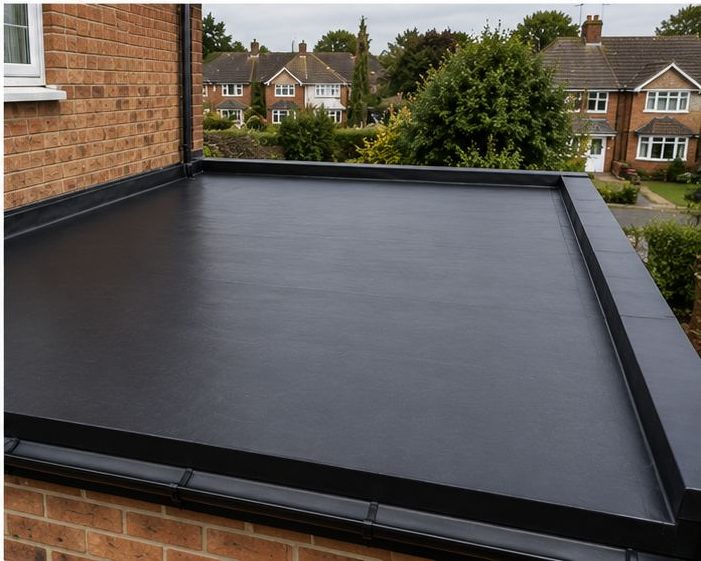
This is particularly relevant on older properties in Kingsweston where a flat roof has had a previous covering, such as felt, for many years. Felt roofs are prone to gradual water ingress, especially around seams and edges, and this moisture can slowly affect the timber deck beneath without being obvious from above. It is not unusual, when we strip back an old felt covering, to find sections of decking that have softened or deteriorated in ways that were not visible until the old material was removed.
Because of this, a proper EPDM installation always includes a full inspection of the deck once any existing covering has been taken up, rather than simply laying new membrane over whatever is underneath. Where boarding is found to be sound, it can usually be reused as the base for the new EPDM system. Where sections are compromised, replacing that timber before installation is essential, because installing rubber roofing over deteriorated decking would only mask a problem rather than solve it, and would risk premature failure of the new roof.
Deck condition also affects how the roof drains. A deck that has sagged or deflected due to long-term water damage can create low spots where rainwater collects rather than running off towards the outlets, and this ponding puts extra strain on the membrane over its lifetime. Addressing any structural irregularities in the deck as part of the installation helps ensure the finished roof drains properly from day one.
Ventilation of the roof void beneath the deck is another factor worth considering, particularly on older Kingsweston properties where roof construction may not follow current best practice. Poor ventilation can contribute to condensation and, over time, further deterioration of the timber, so this is something worth checking as part of a wider assessment rather than treating deck and membrane as entirely separate issues.
Ultimately, a thorough approach to deck condition is what allows an EPDM roof to deliver the long service life it is capable of. Cutting corners at this stage, even if it means a cheaper quote in the short term, tends to lead to problems resurfacing within a few years. If you are considering EPDM for a property in Kingsweston, Brunel Roofing Bristol will always inspect the deck properly, explain honestly what condition it is in, and only proceed with an installation once the base beneath the membrane is sound.
Get a Free Quote for EPDM Roofing in Kingsweston
Every roof is different — the fastest way to get an accurate answer is a quick chat with our team.