
The fascia board is the horizontal board fixed to the ends of the rafters at the eaves, closing off the roof structure and forming the visible edge that runs along the top of the wall. It is easy to think of fascias purely as a finishing detail, but they actually do several jobs at once, and getting them right is an important part of any new roof installation in Kingsweston.
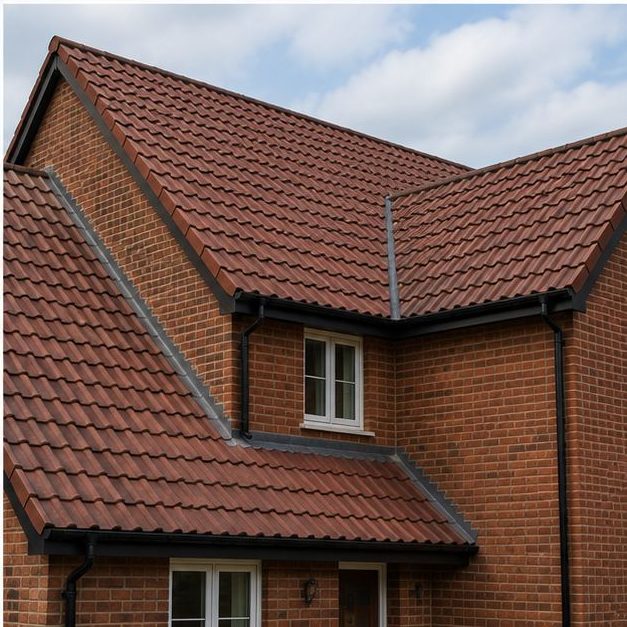
Structurally, the fascia caps and protects the exposed ends of the rafters, which would otherwise be open to the weather. It also provides the fixing point for guttering, meaning the fascia has to carry the weight of the gutter and whatever water and debris sits in it, particularly during heavy rain. If the fascia itself is weak, damp or poorly fixed, the guttering above it will never sit securely, however new that guttering might be, and brackets can slowly work loose even when the gutter itself is in good condition.
The fascia also works closely with the eaves tray, tilting fillet and first tile course to form a complete weatherproofing system. Tiles overhang the fascia by a set amount so that water drips clear into the gutter rather than running down the face of the board, and this overhang has to be consistent along the whole length of the roof to look right and function properly. On homes around Kingsweston with a mix of period detailing and later extensions, matching this overhang and alignment across different roof sections takes a bit of care, particularly where an extension roof meets an older original section at a different height or pitch.
The material used for the fascia also affects how it performs over time. Timber fascias can look attractive and suit older, more traditional properties, but they need periodic painting or treating to stay watertight, whereas uPVC fascias are largely maintenance-free once fitted, though some homeowners feel they suit a more modern property better than a period one. Either way, the fascia needs to be fitted dead straight and properly supported along its length, since any twist or dip will be visible once the roof and gutter are complete.
Where a soffit is fitted underneath the fascia to close the underside of the eaves, ventilation is often introduced through soffit vents that allow air to pass into the roof void while keeping out rain and insects. This is usually planned alongside the fascia and eaves tray as part of the same installation, since all three elements need to align for the ventilation path to actually work as intended.
A new roofing system is only as good as the fascia it sits on, so if your fascias are cracked, warped or pulling away from the wall, it is worth having them assessed at the same time as the roof covering itself. Brunel Roofing Bristol can look at the fascias on your Kingsweston property and recommend whether repair or replacement makes more sense as part of your re-roof.
Get a Free Quote for New Roof Installations in Kingsweston
Every roof is different — the fastest way to get an accurate answer is a quick chat with our team.