
Good roof ventilation depends on air being able to move continuously through the roof void, entering at the lowest point and escaping near the ridge. The eaves are where that airflow begins, and if this low-level entry point is missing or blocked, the rest of the ventilation strategy struggles to work properly, whatever provision has been made higher up the roof.
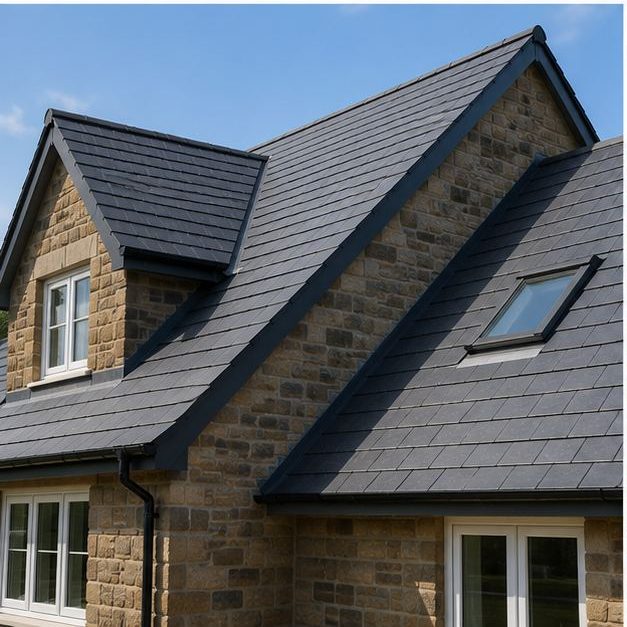
On many older properties around Kingsweston, particularly those built before ventilation requirements were formally set out in building guidance, the eaves were closed up tightly with felt and boarding and no dedicated air path at all. This was rarely a problem when roofs used more breathable underlays, but modern high-performance membranes are less forgiving, and a sealed loft space with a modern underlay and no eaves ventilation can trap moisture rather than let it escape, particularly in colder months when warm, moist air rising from the rooms below is more likely to condense against cold roof timbers.
During a new roof installation, ventilation is typically introduced at eaves level through a ventilated eaves tray or a dedicated eaves ventilation strip fitted along the fascia line, sometimes paired with soffit vents where a soffit board is present. These allow a controlled amount of outside air to enter the roof void continuously, which helps carry moisture-laden air out through higher-level or ridge ventilation before it can condense on cold surfaces such as rafters or the underside of the roof covering. The vents are sized to provide enough airflow to do this job without letting in an excessive draught, following recognised guidance on ventilation area relative to roof size.
Getting the balance right matters. Too little ventilation risks condensation building up unseen in the loft, which can eventually lead to mould growth or timber decay, while poorly designed ventilation gaps can also let in more wind-driven rain or pests than intended if they are not paired with the right proofing details. This is why eaves ventilation, bird proofing and the eaves tray all tend to be specified together as one coordinated system on a proper re-roof, rather than being treated as separate, unrelated items on a quote.
Where a loft has been converted or insulated between the rafters rather than at ceiling level, maintaining a clear ventilation gap above the insulation becomes even more important, since insulation packed too tightly against the roof covering can block the airflow path entirely. This is something worth flagging early if your property in Kingsweston has had loft insulation added or upgraded at any point, so it can be accounted for properly during the re-roof.
If your loft feels damp, shows signs of condensation on the underside of the roof, or simply has no visible ventilation at the eaves, it is worth having this looked at rather than ignored. Brunel Roofing Bristol can assess the ventilation on your Kingsweston property and explain what improvements would make sense as part of a new roof installation.
Get a Free Quote for New Roof Installations in Kingsweston
Every roof is different — the fastest way to get an accurate answer is a quick chat with our team.