
A roof window is only as watertight as the flashing fitted around it, and this is one part of the job where cutting corners shows up quickly in the form of leaks. On roofs across Horfield, where covering types range from plain tiles to interlocking concrete tiles and slate, the flashing kit used has to be matched to both the window and the specific tile or slate profile it sits within, since a flashing kit designed for one covering thickness rarely performs well fitted to another.
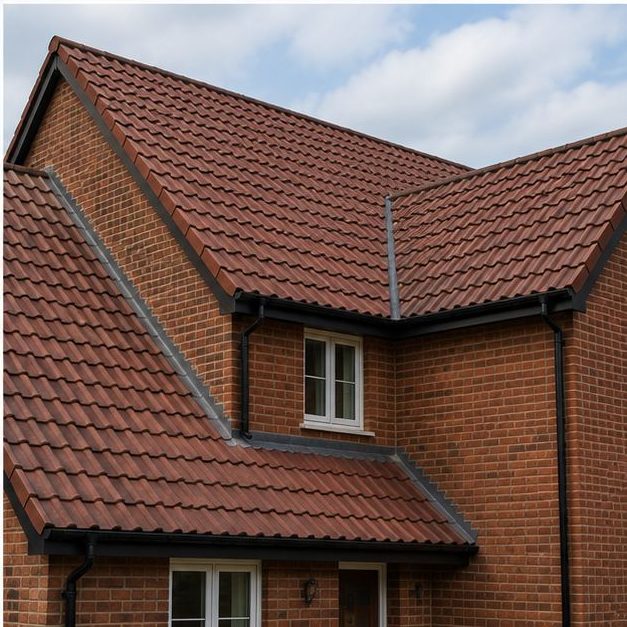
A proper flashing kit works by creating layered, overlapping protection around all four sides of the window opening, directing water around the frame and back onto the roof covering below rather than allowing it to find a way underneath. The apron at the bottom sheds water clear of the frame and onto the tiles below, the side flashings guide water down past the window rather than into the opening, and the head flashing at the top ties the covering above into the frame so nothing can track in from higher up the slope during heavy or driving rain.
Getting this right depends on using the flashing kit designed specifically for the window model and the tile or slate depth in use, since a mismatched kit can leave gaps or force an installer to improvise with sealant, which is never as reliable as a properly engineered flashing set built for the job. It also depends on correct sequencing during installation, since flashing components generally need to be built in as the surrounding tiles or slates are laid, not added afterwards once the covering is already down and fixed in place.
Insulation collars, which sit around the window shaft and prevent warm, moist air from the room below reaching the cold roof timbers, are another part of a proper flashing kit that's easy to overlook but important for preventing condensation problems inside the loft space over time. Brunel Roofing Bristol fits manufacturer-specified flashing kits on every roof window installation and replacement, checking the fit against the actual tile or slate profile on site rather than assuming a standard kit will do. This attention to detail is particularly relevant on older Horfield roofs, where covering profiles can vary from what's commonly fitted today.
It's worth noting that flashing kits are not designed to be reused indefinitely, and a kit that's been removed and refitted during previous roof work, or one that's simply reached the end of its serviceable life, can quietly become a source of leaks even if the window itself is otherwise sound. Where a roof window is being kept during a re-roof rather than replaced outright, checking the condition of its flashing, rather than assuming it can simply be lifted and put back, is a sensible precaution that avoids a brand-new roof developing a leak around an old fitting within the first year or two.
If you're planning a re-roof involving roof windows, or you're concerned about a leak around an existing one, ask Brunel Roofing Bristol about the flashing being used and why it's suited to your roof. A proper explanation, and a quote, is only a phone call away.
Get a Free Quote for New Roof Installations in Horfield
Every roof is different — the fastest way to get an accurate answer is a quick chat with our team.