
Once moss on a Barton Hill roof has been left for a few years, it often builds up into thick, established cushions that can look daunting to remove. The good news is that even heavy growth can be dealt with safely and effectively, provided the right method is used rather than the most aggressive one.
The instinct many people have is that thick moss needs to be blasted off with high-pressure jet washing to shift it quickly. In practice, this is often the wrong approach, particularly on the older tiled and slated roofs common across Barton Hill. High pressure can strip protective granules from tiles, force water beneath the roof covering, and dislodge tiles that were already loose but not obviously so, turning a cleaning job into a repair job.
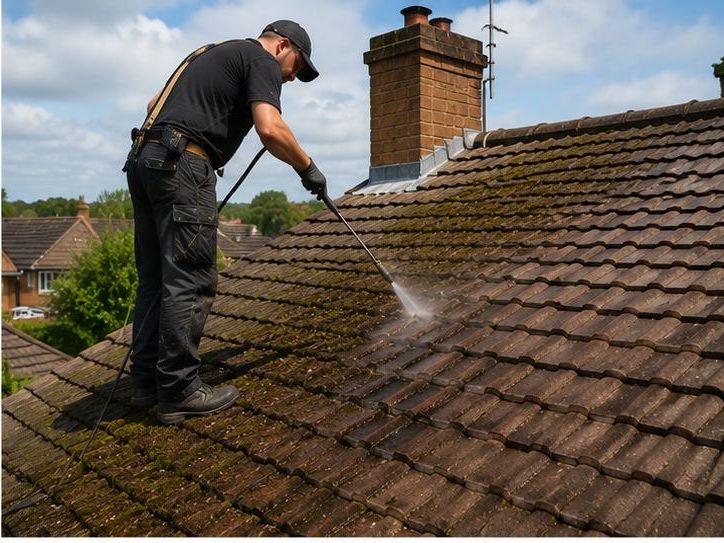
Protective equipment and safe working practices matter throughout this process too, both for the roof and for whoever is carrying out the work. Thick, wet moss can make roof surfaces genuinely slippery, and treating a heavily overgrown roof safely means taking the time to work methodically rather than rushing across a surface that has not yet been properly cleared, which protects both the person doing the job and the tiles themselves from avoidable accidental damage.
A more considered approach starts with a proper assessment of the roof before any treatment begins, looking at the tile type, the roof's age, and the extent and thickness of the growth. This tells us what the roof can safely tolerate and shapes how the job is carried out, rather than applying the same method regardless of what condition the roof is actually in.
For most Barton Hill roofs, a soft-wash approach using an appropriate biocide treatment is the safer and more effective route, even for thick, established moss. The treatment is designed to work into the growth and break it down at the root, allowing it to be removed far more gently than scraping or high-pressure blasting would require, and with considerably less risk to the tiles underneath.
Thick moss is often cleared in stages rather than in a single pass, particularly where growth has built up over several years. This allows loosened material to be removed carefully and gives a clearer view of the tile surface as work progresses, which matters because heavier growth is more likely to have been concealing cracked tiles or other issues that need identifying along the way.
Loose moss removed from the roof also needs to be cleared from gutters and downpipes as part of the job, since heavy growth sheds a considerable amount of debris as it is treated and dislodged, and leaving that material to wash down and settle in the drainage would undo much of the benefit of the clean.
Time on site is also worth being realistic about when growth is heavy. A thick, long-established covering simply takes longer to treat properly than a light dusting of new growth, and rushing the process to save time is one of the more common ways damage occurs. Allowing the treatment to work as intended, rather than trying to force results faster than the method allows, is part of what keeps a thorough clean genuinely safe for the tiles underneath, even if it means the job takes a little longer than expected.
If your Barton Hill roof has thick, long-established moss that you have been putting off dealing with, it is worth having it looked at properly rather than assuming the worst about what removal would involve. Brunel Roofing Bristol can assess the roof and carry out the work safely, using an approach suited to your specific tiles.
Get a Free Quote for Roof Cleaning in Barton Hill
Every roof is different — the fastest way to get an accurate answer is a quick chat with our team.