
A roof-to-wall junction, known in the trade as an abutment, occurs anywhere a roof slope finishes against a vertical wall rather than running to a free edge. Across St Pauls, with its dense rows of terraces, rear extensions and closely built townhouses, these junctions are everywhere: where a single-storey rear addition meets the main house, where a roof slope runs into a taller neighbouring gable, or where a bay window roof meets the wall above it, a detail that appears again and again on the area's period frontages.
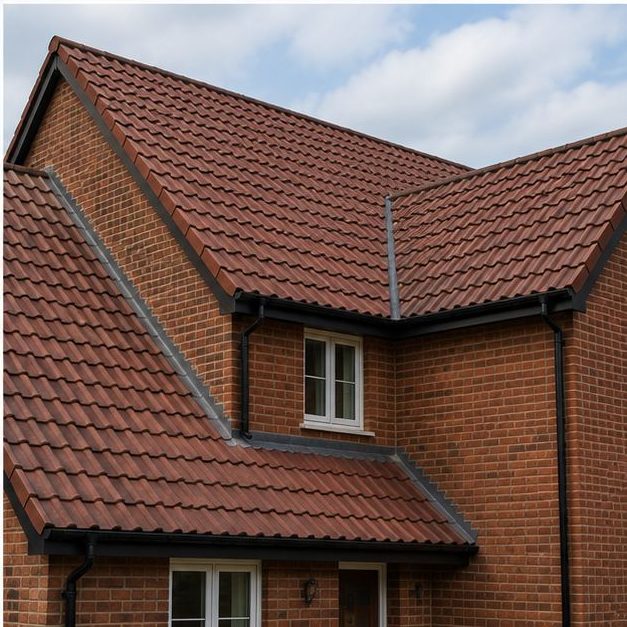
Without proper leadwork, an abutment is simply a gap where the roof covering stops and the wall begins, and that gap is one of the most reliable places for water to get in. Cover flashing, dressed into the mortar joints of the wall and lapped over the top of the roofing felt or membrane, closes this junction completely, directing rainwater back onto the roof surface and away from the join rather than letting it run behind the covering and into the structure of the house.
The quality of this detailing matters more than most homeowners realise. A flashing that is cut too short, not tucked far enough into the mortar joint, or fixed with the wrong lap can look perfectly fine from the ground for years while still allowing slow water ingress that eventually shows up as damp patches, discoloured staining, or a soft patch of plaster on an internal wall that borders the roof line, often long after the original installation has been forgotten about.
On rear extensions and additions, which are common across St Pauls as older properties have been adapted and extended over the years to suit changing needs, abutment flashing needs particular care because the roof pitch and the wall height often do not match a standard template. Brunel Roofing Bristol assesses each junction individually when quoting for a new roof, rather than assuming a one-size-fits-all approach will suit every abutment on the property, which is especially important where an extension roof meets an older section of the main house.
It is also useful to check how an abutment was originally built when a lower roof was added at a later date, since older extensions in St Pauls were not always tied into the main house's leadwork correctly in the first place. A re-roof gives an opportunity to correct this properly, tying the new flashing into the existing wall in a way that the original builders may not have managed, sometimes decades earlier.
Because these junctions are often hidden behind guttering or partially obscured by growth on older walls, they are easy to overlook until a leak forces the issue. If you have an extension or addition in St Pauls where the roof meets an existing wall, it is worth having the abutment flashing specifically checked, and Brunel Roofing Bristol can include this in any new roof quotation for the property.
Get a Free Quote for New Roof Installations in St Pauls
Every roof is different — the fastest way to get an accurate answer is a quick chat with our team.