
Among Old Market's older housing stock, quite a number of the Georgian and Victorian buildings were originally roofed in natural slate, a material that was widely used across this part of Bristol thanks to its durability and the fine, uniform lines it gives a pitched roof. Where a building still carries its original slate, or where slate is clearly the material the roofline was designed around, replacing like with like is often the option that keeps the building looking correctly proportioned and true to its period.
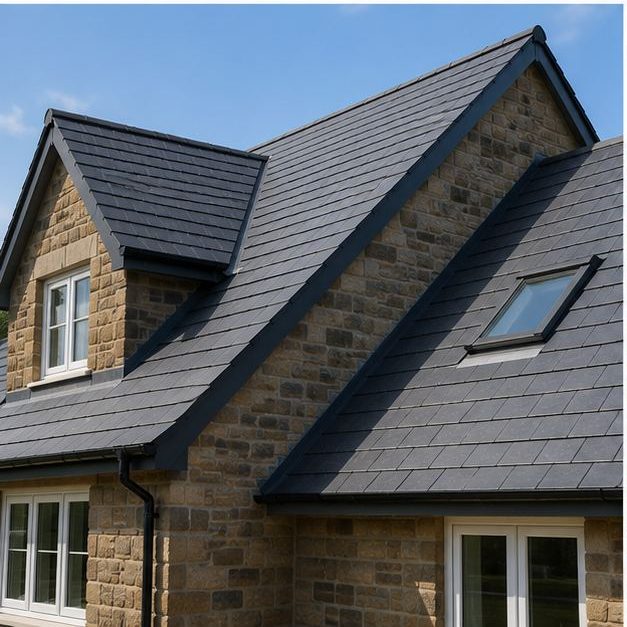
Natural slate has a subtlety that manufactured alternatives still struggle to fully replicate: a slight variation in thickness and tone from one slate to the next, a fine grain that catches the light differently across the roof, and a low-profile finish that sits flush rather than standing proud of the batten line. On a taller Old Market townhouse, where the roof is genuinely visible from the street and from neighbouring upper windows, that subtlety can make a noticeable difference to how the whole building presents itself, especially when viewed alongside similarly slated properties nearby.
It isn't automatically the right choice for every property in the area, however. Slate is heavier than most concrete or artificial alternatives, so the existing roof structure needs to be checked to confirm it can safely take the load, particularly on older buildings where past alterations, loft conversions or previous re-roofs may have affected the timbers without this being obvious from the outside. Cost is a genuine factor too, and for some homeowners a high-quality artificial slate offers a sensible middle ground between appearance and budget without asking too much of an older roof structure.
Where natural slate is used, getting the detailing right around chimneys, valleys and verges matters just as much as the slate itself, since a poorly finished junction can undermine even the best material and lead to leaks that are difficult to trace once the roof is complete. Careful fixing and consistent coursing also help the roof age evenly, rather than developing an uneven, patchy appearance after a few winters of Bristol weather.
Sourcing matters as well. Slate varies considerably by quarry and grade, and using a consistent, good-quality batch across the whole roof avoids the visible colour banding that can occur when slates from different sources are mixed together on the same elevation. Reclaimed slate is sometimes suggested as an option for a character property, and while it can work well in the right circumstances, it needs careful inspection first, since slates that have already given decades of service may not have as much useful life left as they appear to from ground level.
For homeowners weighing up slate against other coverings, it's worth remembering that the decision affects more than just the roof itself; it tends to shape how the whole property is perceived on the street, and on a taller Old Market townhouse where the roof forms a genuine part of the visible facade, that's not a small consideration.
If you're considering natural slate for a character property in Old Market, Brunel Roofing Bristol can assess the existing roof structure, explain whether slate is a realistic option, and put together a specification that suits both the building and your budget.
Get a Free Quote for New Roof Installations in Old Market
Every roof is different — the fastest way to get an accurate answer is a quick chat with our team.