
When a roof in Horfield already has a roof window fitted, or a new one is planned as part of the works, the sequence of the installation matters just as much as the materials used. Because Horfield has such a mix of property ages and roof pitches, from older terraces to later semi-detached extensions, the approach to working around a window opening has to be tailored to what's already there rather than treated as a standard, one-size-fits-all job. A roofer who rushes this stage, or treats the window as an afterthought once the main covering is finished, tends to leave a weak point exactly where it matters most.
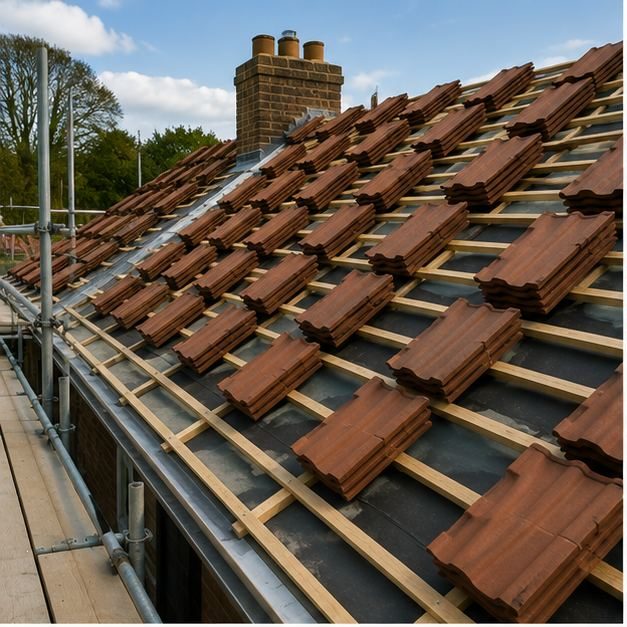
The process typically starts with stripping the existing covering back to the rafters, at which point the timber around the window opening can be properly inspected. Any trimmers or headers that have moved, softened or been poorly supported in the past are corrected before anything new goes on, since a roof window relies on sound structural timber around it to stay square and watertight for years to come. Where an opening needs to be formed or resized for a new window, this is also the point at which that structural carpentry happens, well before any covering goes back on, so the frame has time to be checked and adjusted if needed.
Once the underlay and battens are running again, the covering is built up towards the window opening in a controlled way, with tiles or slates cut and set out so the courses line up neatly on all four sides. This is where careful setting-out pays off, as an uneven batten gauge around a window looks obvious from ground level and can also affect how well the flashing sits. Installers generally work up to the window from below, checking alignment at each course rather than leaving the fiddly cutting until last, which is when mistakes are more likely to happen under time pressure.
Only once the surrounding covering is correctly positioned is the window's flashing kit introduced, tying the roof covering and the window into a single, continuous waterproof layer rather than two separate elements simply pushed together. The apron, side flashings and head flashing are built in as the tiling progresses around the frame, not bolted on afterwards, which is the detail that most affects long-term performance. Brunel Roofing Bristol takes this staged approach on every re-roof involving windows, checking each layer before moving to the next rather than treating the window as a separate task from the rest of the roof.
Weather conditions on the day also play a part in how this is managed on site. A window opening left exposed overnight, or a run of underlay left unsecured while tiling catches up around it, is how avoidable problems creep in during a re-roof. Experienced crews plan their day's work so the opening is never left vulnerable for longer than necessary, temporarily protecting it if the covering around it can't be finished in one visit, which matters on a roof of any size where the window is just one part of a larger job running over several days.
If you have a roof window on your Horfield property, or you're considering having one fitted while your roof is renewed, it helps to talk through the sequencing before work starts so you know exactly what's involved and when. Brunel Roofing Bristol would be happy to explain the process for your particular roof and provide a no-obligation quote for the work involved.
Get a Free Quote for New Roof Installations in Horfield
Every roof is different — the fastest way to get an accurate answer is a quick chat with our team.