
It is a question we hear often from homeowners in Ashley Down: once moss has been removed from a roof, how long before it needs doing again? There is no single answer that applies to every property, but there are some useful patterns worth knowing.
For a fairly open, well-ventilated roof with reasonable sun exposure, moss tends to regrow slowly, and a check every few years is often enough to keep things under control. For roofs in more shaded positions, perhaps close to mature trees or on a north-facing slope that rarely dries out fully, regrowth can be noticeably quicker, sometimes needing attention within a couple of years of the last clean.
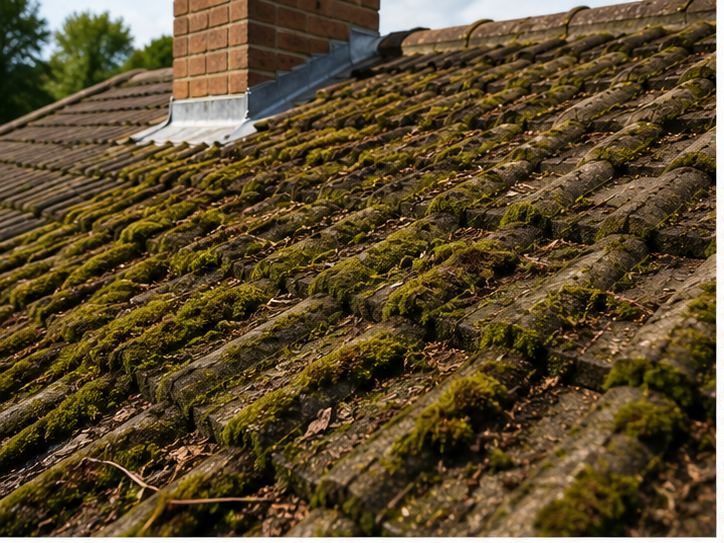
Weather exposure over a given winter can also shift the picture from one year to the next. A particularly wet, mild winter tends to favour faster moss growth than a colder, drier one, which means the interval that suited a roof in previous years is not always a perfectly reliable guide going forward. Treating any fixed schedule as a starting point rather than a strict rule, and adjusting based on what the roof actually shows, tends to give better results over time.
Ashley Down has a real mix of housing, from terraces close to Gloucester Road to properties nearer Ashley Down Road and the green space around the old railway sidings, and roof conditions vary accordingly. A roof's age, the type and texture of its tiles, its pitch, and how much shade it gets from surrounding trees and buildings all influence how quickly moss returns after treatment.
Rather than working to a fixed calendar, it is generally more useful to keep an eye on the roof itself. Early signs, small patches of green or black discolouration starting to appear on the tile surface, particularly along ridges, valleys, or the lower edges of slopes, are a good indication that it is worth having a look before the growth becomes established and widespread.
Treating moss while it is still light is also considerably easier and less disruptive than waiting until it has built up into thick, established growth across large areas of the roof. Light growth generally responds well to a proper soft-wash and biocide treatment, whereas heavier growth can take longer to clear and is more likely to have already caused some of the secondary issues, like trapped moisture or gutter debris, that come with prolonged moss cover.
It is also worth remembering that a biocide treatment does not create a permanent barrier against moss returning. It removes existing growth and inhibits regrowth for a period, but the environmental conditions that caused the moss in the first place, shade, moisture, tree cover, do not go away, so periodic reassessment remains sensible even after a thorough clean.
It is also worth factoring in what happens between checks, not just the checks themselves. A light dusting of moss spotted early can often be dealt with as a smaller, more contained job, whereas leaving the same roof unchecked for several more years typically means dealing with thicker growth across a wider area, which naturally takes longer and costs more to put right. Building in even an informal habit of looking up at the roof from the garden every so often can make a genuine difference to how manageable future treatment turns out to be.
If you are unsure how your particular Ashley Down roof is likely to behave, or simply want an honest opinion on whether it is due attention now, it is worth having it looked at properly rather than guessing. Brunel Roofing Bristol can assess the roof's condition and advise on a sensible interval for your property going forward.
Get a Free Quote for Roof Cleaning in Ashley Down
Every roof is different — the fastest way to get an accurate answer is a quick chat with our team.