
It is a pattern many Ashley Down homeowners notice sooner or later: one slope of the roof is thick with green moss while the other side, sometimes just a few metres away, stays largely clear. It can seem odd given both sides are part of the same roof, but there is a straightforward explanation.
The main factor is sunlight. A north-facing roof slope receives far less direct sun over the course of a day and year than a south-facing one. Less sun means the surface stays cooler and takes longer to dry out after rain, and that persistent dampness is exactly what moss needs to establish and spread. A south-facing slope, by contrast, dries out relatively quickly, which makes it a much less hospitable environment for moss to take hold.
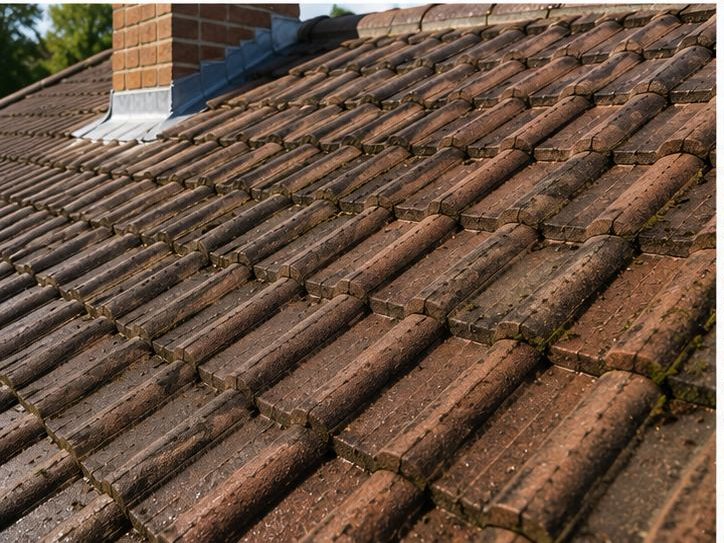
Roof colour itself can play a subtle part too. Darker tile colours absorb more heat from available sunlight than lighter ones, which can marginally speed up drying on an already sunnier slope and slightly widen the gap between how the two sides of the same roof behave over time. It is a smaller factor than orientation or shade, but on a borderline roof it can be enough to tip a slope one way or the other in terms of how quickly moss establishes.
On many Ashley Down streets, the orientation of terraced housing means this effect is quite pronounced, with rows of homes sharing a similar layout and therefore a similar pattern of one shaded, moss-prone slope and one sunnier, cleaner slope. It is worth checking whether your own roof follows this pattern, since it can help explain why treatment seems to be needed more often on one side than the other.
Shade from nearby buildings, chimneys, or trees can intensify this effect further. A slope that is already north-facing and additionally overshadowed by a taller neighbouring property or overhanging branches will typically show the heaviest moss growth of all, since it barely gets meaningful drying time even during sunnier periods of the year.
Roof pitch plays a role too. A shallower pitch drains more slowly than a steep one, meaning water sits on the tile surface for longer regardless of orientation. Combine a shallow pitch with a shaded, north-facing aspect and you have close to the ideal conditions for persistent, fast-growing moss.
None of this means the sunnier side of the roof is entirely immune, moss can still establish there over time, particularly as tiles age and their surface becomes rougher. It simply tends to happen more slowly and less extensively than on the shaded slope.
This uneven pattern also has a practical implication for how a clean should be approached. Treating both slopes identically, when one is heavily shaded and thickly covered while the other carries only light growth, rarely makes sense. A more sensible approach assesses each slope on its own merits, applying a thorough treatment where growth is heaviest while avoiding unnecessary work on areas that do not need it, which keeps the job focused and proportionate to what the roof actually requires.
If one side of your Ashley Down roof is noticeably worse than the other, it is a useful thing to mention when arranging a clean, since it helps in planning the right treatment for each area rather than a uniform approach. Brunel Roofing Bristol can assess both slopes properly and advise on what each one actually needs.
Get a Free Quote for Roof Cleaning in Ashley Down
Every roof is different — the fastest way to get an accurate answer is a quick chat with our team.