
Moisture in a roof space does not always come from outside. Everyday activities such as cooking, showering and drying laundry indoors release a surprising amount of warm, moist air into a home, and if that air finds its way up into an unventilated loft it can condense on cold surfaces such as the underside of the roof covering or exposed rafters. In many Eastville properties, particularly those that have been well insulated over the years without equal attention paid to ventilation at the same time, this can create a persistent, low-level moisture problem in the loft that has nothing to do with a leak in the roof covering itself.
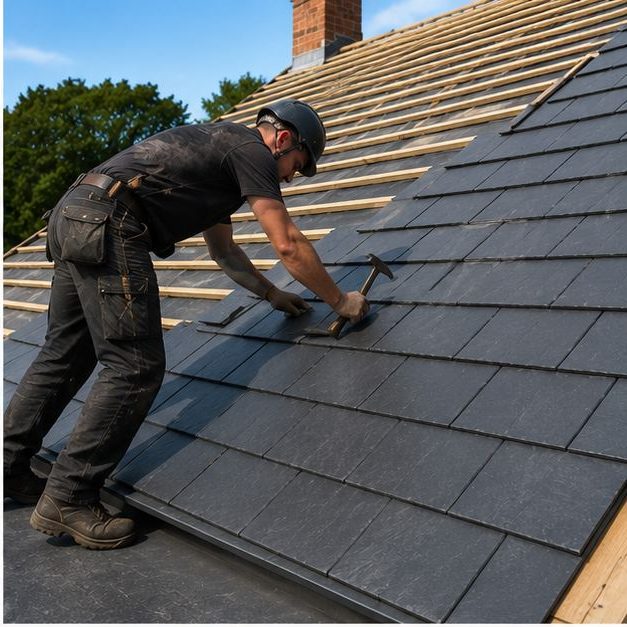
Roof ventilation works by allowing a steady flow of outside air through the loft space, which keeps the temperature and humidity up there closer to that of the exterior air and prevents warm, damp indoor air from lingering long enough to condense on cold timber. This is typically achieved through a combination of eaves vents, ridge vents or discreet tile vents positioned to create a gentle but continuous airflow across the underside of the roof without in any way compromising its weatherproofing from outside. The exact combination needed depends on the roof's shape and pitch, which is why a one-size-fits-all approach rarely performs as well as a solution tailored to the individual property.
Without adequate ventilation, the effects of trapped moisture tend to build up gradually rather than announce themselves immediately in an obvious way. Timber can begin to darken and, over a longer period, eventually soften, insulation can become damp and noticeably less effective at retaining heat, and in more advanced cases mould can start to develop on roof timbers or on the underside of the sarking felt. Because all of this happens out of sight in a part of the house people rarely visit, it is often only discovered when a loft is inspected for an unrelated reason, such as a suspected leak, a house survey, or ahead of a re-roofing project.
When Brunel Roofing Bristol carries out re-roofing work on Eastville homes, ventilation is considered as part of the overall specification from the outset rather than being treated as an optional extra to be added later, since a brand new covering fitted over a poorly ventilated structure can still remain vulnerable to exactly the same condensation issues even though the visible roof itself is new. Getting the balance right between insulation and airflow is a key part of a roof performing well over the whole of its intended lifetime, not just in its first few years.
If your loft feels consistently damp to the touch, or you have noticed a musty smell when you go up there to store belongings, poor ventilation could well be a contributing factor that is worth investigating properly. Brunel Roofing Bristol can assess your roof space and advise on whether improved ventilation would help, either on its own or alongside any other work that might be needed.
Get a Free Quote for New Roof Installations in Eastville
Every roof is different — the fastest way to get an accurate answer is a quick chat with our team.