
St Pauls has a strong concentration of older Victorian and Edwardian housing, with roofs that have often been through many decades of British weather. Removing moss from a roof like this needs a different approach to a newer property, and getting it wrong can cause more harm than the moss itself.
The main risk with older roofs is that materials, whether original clay or slate tiles, or ageing mortar bedding, can become more porous and brittle with age. A tile that has weathered fifty or more years of frost, sun, and rain does not necessarily have the same strength it once had, even if it looks structurally sound from the ground. This is exactly why we avoid aggressive high-pressure jet washing on roofs of this age.
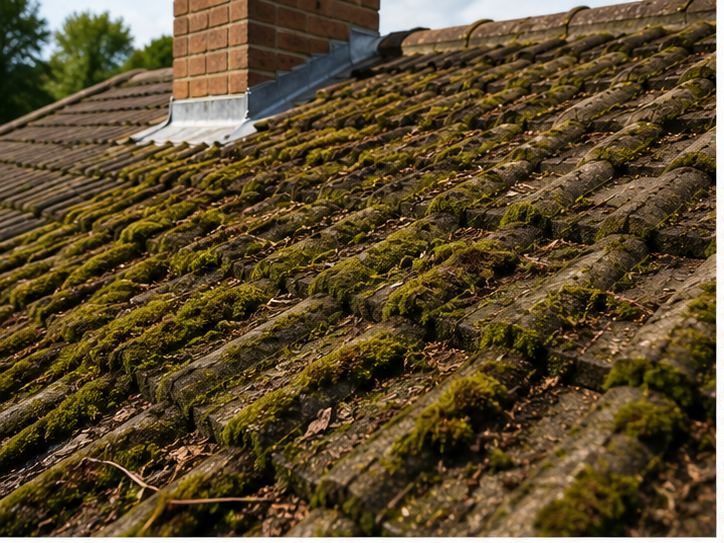
High pressure water can strip the surface layer off older tiles, dislodge already-weakened fixings, or force water beneath tile edges and into the roof structure, none of which is a risk worth taking on a period property in St Pauls where the roof covering may be original or close to it. Instead, we use a gentler soft-wash approach, applying biocide treatments that break down moss, algae, and lichen without relying on mechanical force.
We also pay close attention to how water is meant to drain off a St Pauls roof of this age, since decades of minor settlement can shift how valleys and gutters actually perform compared with the original design. Understanding this drainage pattern before cleaning begins helps ensure that any loosened moss and debris is cleared properly rather than simply redistributed to a different low point on the same roof.
This method takes a little longer to show its full effect than a blast of high-pressure water, since the treatment needs time to work through the organic growth, but it is considerably safer for the roof covering underneath. For the kind of established, sometimes original tiles found on many St Pauls terraces, that trade-off is worthwhile.
Assessing the roof before starting is just as important as the cleaning method itself. On an older roof, we look for signs of existing wear, such as cracked or slipping tiles, before any treatment begins, so we know which areas might need extra care or a lighter touch, and so any pre-existing issues are not mistaken for new damage once cleaning is complete.
Once moss and growth are removed, older roofs in St Pauls often reveal a genuinely attractive original tile or slate colour that has been hidden under green and black staining for years, alongside a clearer picture of the roof's actual condition, mortar and all.
Timing the work sensibly also matters on older roofs, since damp or particularly cold conditions can affect how well biocide treatments perform. We factor local weather into scheduling where we can, so that a St Pauls property gets the full benefit of the treatment rather than a rushed job carried out in conditions that work against it. Where a St Pauls property has already had some repair work carried out over the years, we also take note of which sections are original and which have been replaced, since newer tiles or patched mortar can sometimes need a slightly different level of care during cleaning than the surrounding older material.
If you own an older property in St Pauls and are considering moss removal, we would recommend an assessment first so the right method can be used for your specific roof. Get in touch with Brunel Roofing Bristol to arrange a visit.
Get a Free Quote for Roof Cleaning in St Pauls
Every roof is different — the fastest way to get an accurate answer is a quick chat with our team.