
Established roofs across St Pauls, many dating back to the Victorian and Edwardian terraces that give the area much of its character, tend to accumulate moss, algae, and lichen more readily than newer roof coverings elsewhere. There are several reasons why age and organic growth so often go hand in hand.
Older tile and slate surfaces are naturally more textured than modern materials, having weathered for decades under sun, rain, and frost. That texture, along with a slightly porous surface on ageing clay tiles in particular, gives airborne moss spores and algae something to grip onto, whereas a smoother, newer surface offers less of a foothold in the early stages.
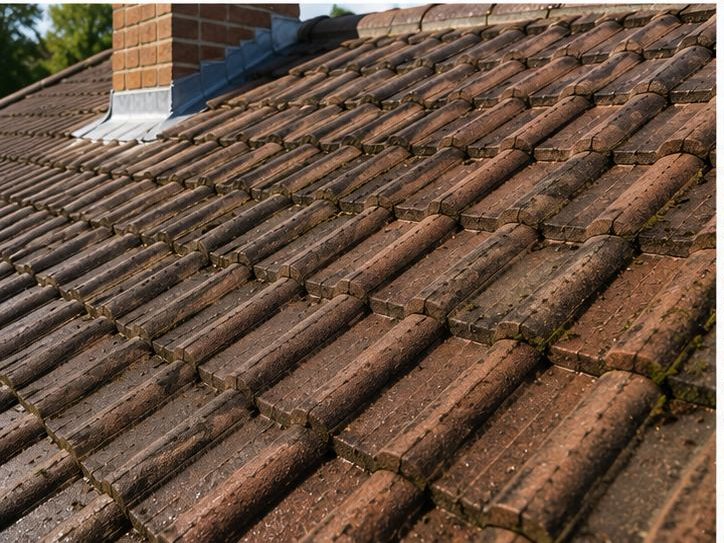
The dense, terraced nature of much of St Pauls also plays a role. Closely spaced roofs, narrow streets, and neighbouring buildings can create pockets of shade and reduced airflow across certain roof slopes, particularly north-facing sections, which then stay damp for longer after rain than a roof in a more open position would. That extended dampness is exactly what organic growth needs to establish and spread.
The dense terrace layout that gives St Pauls much of its character also limits how much wind can pass across certain roof sections, and reduced airflow, alongside shade, is another factor that slows how quickly a roof dries after rain. Terraces set close together with narrow gaps between them often show this effect more clearly than a detached property with open space on every side would.
Time itself is a significant factor too. Moss and lichen growth tends to be a slow, cumulative process, often taking hold gradually over several years rather than appearing overnight. A roof that has not been cleaned in a decade or more, which describes a fair number of properties across St Pauls, has simply had far more opportunity for growth to establish, thicken, and spread across the tile surface.
Once established, organic growth can also become somewhat self-perpetuating. A thick patch of moss holds moisture against the roof surface even during dry spells, creating a consistently damp microclimate that encourages further growth nearby, while also potentially softening surrounding mortar over time.
None of this is unusual or a sign of a poorly maintained property, it is simply what happens to most tile and slate roofs eventually without periodic attention. The good news is that even heavily established growth responds well to a proper soft-wash clean, which removes it gently without the risk of damage that aggressive pressure washing carries on older materials.
Local air quality and general atmospheric conditions can play a small supporting role too, since fine particulate matter settling on a roof surface can, over time, provide additional material for moss and algae to establish within, alongside the moisture and shade factors already at play. It all adds up to established St Pauls roofs simply having had more time, and more contributing conditions, for growth to take hold than a newer roof elsewhere might. Roof orientation relative to neighbouring terraces also matters more in a dense area like St Pauls than it might elsewhere, since a roof tucked behind a taller adjoining building can lose direct sun for a larger part of the day than the general aspect of the street would suggest.
If your St Pauls roof has years of built-up moss or algae, we would be glad to assess it and talk through the best way to treat it. Get in touch with Brunel Roofing Bristol to arrange a visit.
Get a Free Quote for Roof Cleaning in St Pauls
Every roof is different — the fastest way to get an accurate answer is a quick chat with our team.