
Portishead's position on the Severn Estuary means properties here often take a heavier battering from wind than homes further inland, and after a blustery spell it is worth knowing what to look for before deciding whether a roof needs attention. The safest approach is always to start from ground level rather than climbing up for a closer look, since damage that looks minor from a ladder can be much harder to judge accurately, and a fall is far more costly than a roof repair.
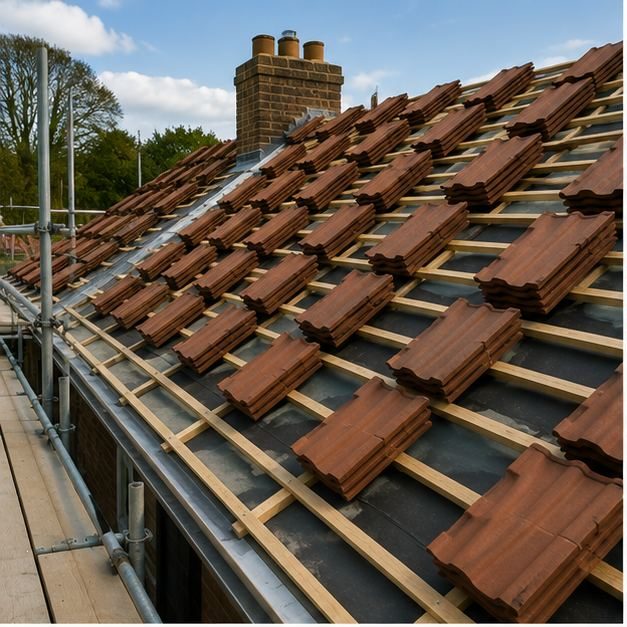
From the garden or the street, scan the roof slopes for tiles or slates that look out of alignment, patches where the colour or texture suddenly differs, or any dark gaps that suggest a covering has slipped or come away completely. Binoculars can help pick out detail without the need to get closer. It is also worth checking gutters and the ground around the house for broken fragments, as debris on the patio or driveway is often the first real sign that something has been dislodged higher up.
Walking right around the property is worth the extra few minutes, since wind direction during a storm is rarely constant and damage often ends up concentrated on just one or two elevations rather than spread evenly across the whole roof. A slope that faces the estuary directly may show clear signs of disturbance while the opposite side of the same roof looks completely untouched, so a check limited to the view from the front door alone can easily miss the area that actually needs attention.
Inside the property, a torch check of the loft is one of the most reliable ways to assess condition after windy weather, since daylight showing through the roof deck, damp patches on timbers, or a musty smell can all point to a breach that is not obvious from outside. Older harbourside cottages in Portishead and the newer estates around the marina can both be affected, though the underlying causes and the fixings involved often differ quite a bit between the two.
It is generally best to carry out this check once the wind has properly died down and any rain has cleared, rather than heading outside while it is still gusting and visibility is poor. A calm, dry morning after the event gives a far clearer and safer picture of what has actually happened, and it also avoids the risk of further loose material coming down while you are stood underneath assessing the damage. If you can see cracked slates, bent flashing, or debris caught in a gutter, resist the temptation to try clearing it yourself from a ladder, since that is exactly the kind of task best left to someone equipped and trained for roof-level work.
If anything looks disturbed, it is worth getting a trained pair of eyes on the roof promptly rather than waiting to see whether the problem gets worse on its own, particularly with more rain forecast. Brunel Roofing Bristol carries out these inspections regularly across Portishead and can usually tell within a short visit whether a covering has simply shifted or whether the wind has exposed a more significant underlying weakness.
Getting a proper assessment early also gives you options rather than leaving you to react to an emergency. If your roof has taken a knock in recent winds, get in touch with Brunel Roofing Bristol for a straightforward inspection and an honest opinion on what, if anything, needs doing next.
Get a Free Quote for New Roof Installations in Portishead
Every roof is different — the fastest way to get an accurate answer is a quick chat with our team.