Rear extensions are a familiar sight across Redfield's terraced streets, where adding a single-storey kitchen or living space extension has become one of the most popular ways to gain extra room without the upheaval of moving house. Almost all of these extensions end up needing some form of flat roof, and EPDM rubber membrane has become one of the most frequently chosen materials for exactly this kind of project.
There are practical reasons why EPDM suits rear extensions particularly well. Because it is typically installed as a single, continuous sheet, a standard domestic rear extension roof can often be covered with minimal or no joints at all, which reduces one of the more common sources of future leaks compared with materials that rely on multiple bonded sections or overlapping layers.
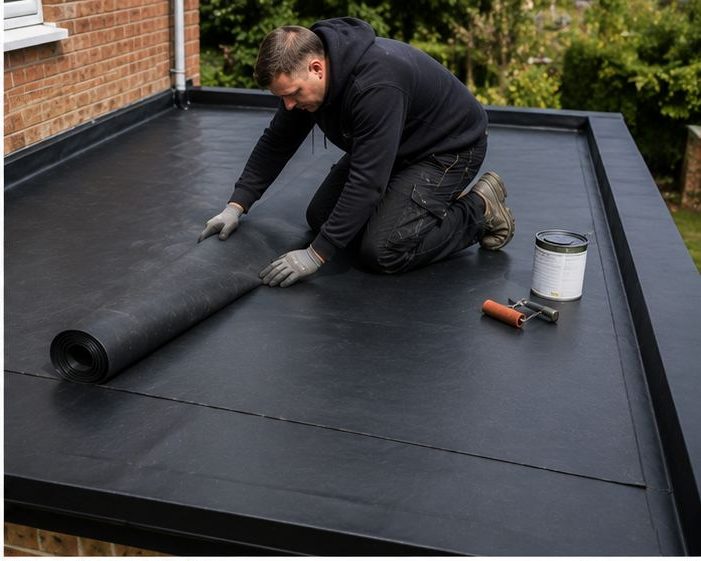
Flexibility is another genuine advantage for extension roofs specifically. A newly built extension can experience some minor settlement in its first year or two as the structure beds in, and a flexible rubber membrane accommodates that kind of movement far better than a more rigid covering, which is more prone to cracking if the roof deck shifts even slightly underneath it.
Redfield's terraced housing stock also means many rear extensions have a fairly compact, straightforward roof shape, often a simple rectangle abutting the rear wall of the main house, which tends to be well suited to EPDM installation. That said, every extension is different, and features like rooflights, junctions with a neighbouring property, or a change in roof level all need proper consideration regardless of how simple the overall shape looks.
Compared with felt, which is still common on older Redfield extensions and outbuildings, EPDM is generally more durable and longer-lasting, coping better with sustained weathering and temperature changes without the cracking and seam failure that tends to affect felt over time. Compared with GRP fibreglass, EPDM typically involves fewer joints on a standard domestic extension, since GRP relies on bonded sections and trims that each represent a potential weak point.
Drainage deserves attention on any rear extension roof, and building a new extension gives the opportunity to get the falls right from the outset. Whatever the roof shape, making sure water has a clear, adequate path to a properly positioned outlet is just as important to long-term performance as the choice of membrane itself.
Timing also matters if an extension is being planned rather than already built. Getting the roofing specification agreed early, alongside the rest of the extension design, tends to give a cleaner result than treating the roof covering as an afterthought once the structure is already up, since decisions about falls, upstands, and outlet positions are far easier to build in from the start than to retrofit later.
For most Redfield homeowners building or re-covering a rear extension, EPDM offers a sensible, low-maintenance option that handles the realities of a domestic extension roof, movement, weathering, and modest complexity, without the drawbacks associated with older or more joint-heavy materials.
If you are planning a rear extension in Redfield and want advice on the right flat roofing option for your specific design, Brunel Roofing Bristol can assess the roof and talk you through what an EPDM installation would involve.
Get a Free Quote for EPDM Roofing in Redfield
Every roof is different — the fastest way to get an accurate answer is a quick chat with our team.