
Longwell Green's older housing stock did not all go up in a single building phase, and it shows in the roofs. A period property here may have started life with a fairly straightforward pitched roof, only to gain a rear outrigger, a side extension or a converted loft space at some point over the following decades. Each addition usually brought its own roof section, tied into the original structure at a junction that was not necessarily built to last a lifetime, and by the time a full re-roof is needed, these homes can have surprisingly intricate roofscapes for their size.
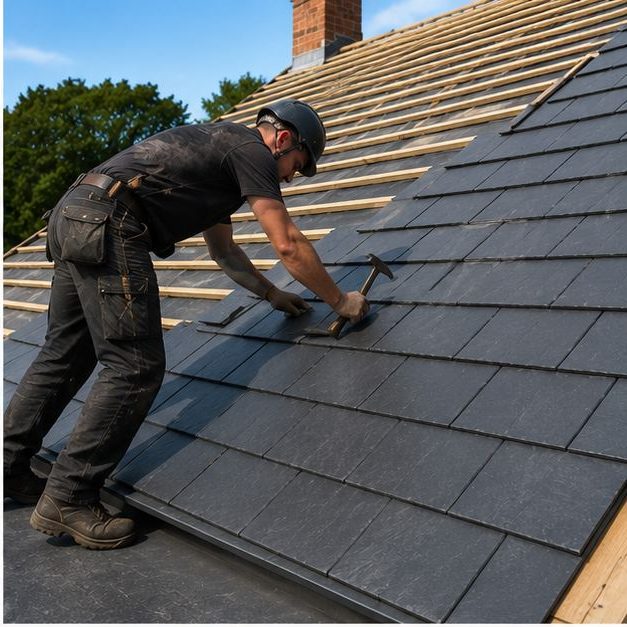
Re-roofing a property like this is not simply a matter of stripping and recovering. Before any new material goes on, it is worth understanding how the original roof and its later additions actually meet structurally, because timbers from different eras do not always align neatly, and older rafters can have been notched, cut back or propped in ways that only become obvious once the covering is removed. A careful strip-back gives us a clear picture of what is underneath and allows any weak or historic repairs to be corrected properly rather than simply covered over again.
Matching materials is another consideration specific to period roofs. Where a property still has some original slate or a distinctive tile profile, it usually makes sense to source a like-for-like replacement, or a close modern equivalent, so the finished roof looks consistent with the rest of the street rather than obviously patched. This matters more in parts of Longwell Green where older cottages and farmhouses sit alongside later infill housing, since a mismatched roof can stand out in a way that affects the overall character of the property.
Complex period roofs also tend to include features that add time to the programme, such as catslide sections, small dormers or changes in pitch between the original build and later additions. None of these are unusual, but they do mean the roof cannot be priced or programmed as though it were a standard modern house. A contractor who has re-roofed similar older Longwell Green properties before will recognise these features early and build them into the plan rather than treating them as unexpected extras once scaffolding is up.
Older roof timbers deserve particular attention on a period re-roof, since decades of small leaks, poor past ventilation or previous patch repairs can leave rafters, purlins or ridge boards weaker than they first appear from below. Once the covering is stripped away, any sections showing rot, insect damage or excessive sagging can be sistered, reinforced or replaced before the new covering goes on, which is far more practical than trying to address structural weakness after the roof is finished. This stage often reveals a little more work than originally anticipated, and a straightforward, honest conversation about any findings, along with photographs where useful, helps homeowners understand exactly what has been found and why it needs addressing before the new roof covering is fixed.
If you own a period home in Longwell Green with a roof that has clearly evolved over the years, it is worth getting it properly assessed before committing to a specification. Brunel Roofing Bristol can survey the existing structure, identify how the various roof sections tie together, and put together a re-roofing plan that respects the age and character of the building while bringing the whole roof up to a consistent modern standard.
Get a Free Quote for New Roof Installations in Longwell Green
Every roof is different — the fastest way to get an accurate answer is a quick chat with our team.