
Before a single tile goes back on a roof, there is a stage of planning that rarely gets talked about but makes a real difference to the finished result. It is called setting out, and it involves working out exactly how the coursing of tiles or slates will run across every plane of the roof so that lines stay level, gauges stay consistent and everything meets up correctly at hips, valleys and abutments. On a simple roof this is fairly quick work. On the kind of multi-plane roofs found on some larger and older properties in Longwell Green, it takes considerably more thought.
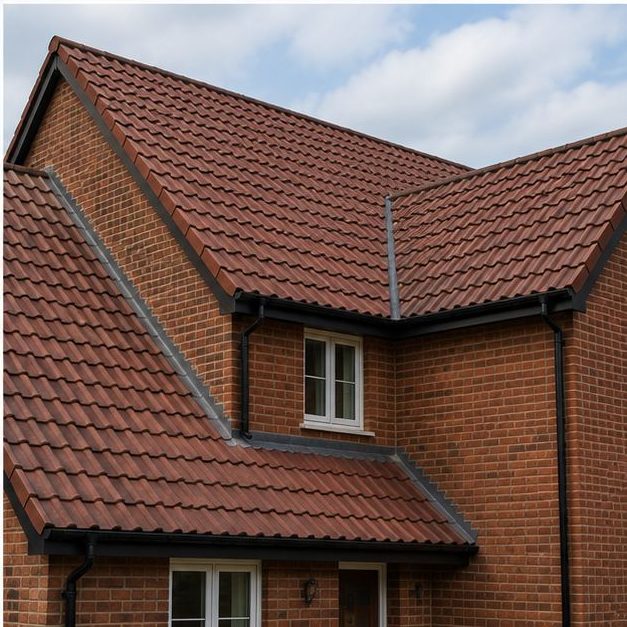
The reason careful setting out matters so much on a complex roof is that any small error made early on tends to compound as the roof progresses. If the tile gauge is not calculated correctly at the eaves, that mistake can travel all the way up the slope and cause problems at the ridge, or leave an awkward cut course running into a valley or dormer cheek. On a roof with several different planes meeting at different angles, as is common across Longwell Green's mix of extended and altered properties, there are simply more opportunities for these small errors to appear, and more places where they become visible once the roof is finished.
Good setting out also considers how materials will be used across the whole roof rather than one section at a time. A tiler working plane by plane without an overall plan might get a good result on each individual slope, only to find the hips or ridges do not line up neatly where those planes meet. Working out the full picture first, before fixing begins, allows adjustments to be made where they are least noticeable rather than forcing a compromise at a prominent junction.
This kind of planning takes time, and it is one of the less visible parts of a re-roofing job, since a homeowner will not necessarily see the calculations that go into it. What they will see, once the roof is complete, is whether the ridge lines run true, whether tile courses stay level across changes in roof shape, and whether hips and valleys look deliberate rather than improvised. On a straightforward roof these things are easy to achieve by default. On a more complicated Longwell Green roof, they are the result of proper preparation.
Setting out also needs to account for the tile or slate size actually being used, since different products have different gauges and cannot simply be assumed to fit a roof in whole numbers of courses. Where a course does not divide evenly, a decision has to be made about where to absorb that difference, and the least visible place to do it is usually somewhere it will not draw the eye, such as behind a chimney or along a less prominent slope, rather than immediately above the eaves where it will be seen from the street every day. Making that decision properly, before a single tile is fixed, is far easier than trying to correct it partway up a roof that has already been started.
If you are having a complex roof replaced and want reassurance that this kind of groundwork is being done properly, it is a fair question to raise with any contractor you are considering. Brunel Roofing Bristol sets out multi-plane roofs carefully before tiling begins, and is happy to talk through that process as part of a quotation for your Longwell Green property.
Get a Free Quote for New Roof Installations in Longwell Green
Every roof is different — the fastest way to get an accurate answer is a quick chat with our team.