
Scaffolding is easy to overlook when thinking about a new roof, since it is essentially the infrastructure that allows everything else to happen safely rather than a visible part of the finished result. On a straightforward two-storey property with a simple roof shape, scaffolding is usually fairly quick to design and erect. On the more complex roofs found on some Longwell Green properties, particularly those with extensions, varying roof heights or dormer windows, the scaffolding itself needs considerably more planning.
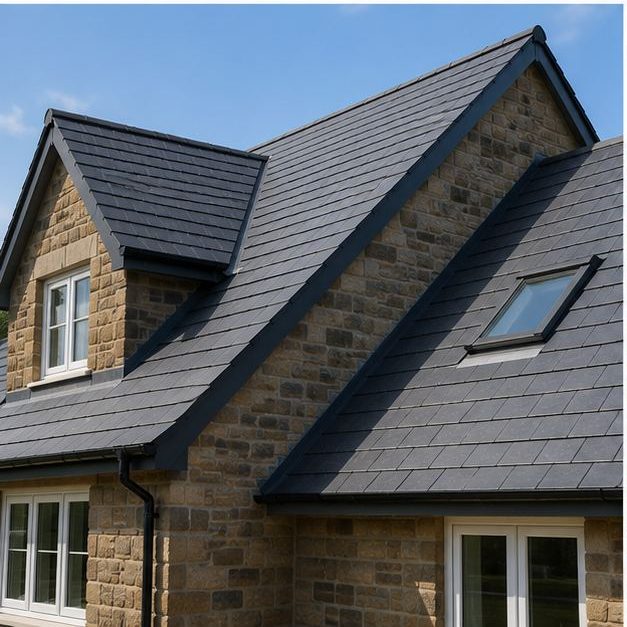
A roof with multiple levels, such as a two-storey main house with a single-storey extension to the rear, effectively needs scaffolding designed around two different working heights rather than one continuous run. Access between these levels has to be safe and practical, since roofers and material need to move between the upper and lower roof areas throughout the job, not just at the start and end. Getting this wrong makes the work slower and less safe, so it is worth having a scaffolding plan that has genuinely considered the shape of the specific property rather than a generic layout.
Dormers, chimneys and other roof features also affect how scaffolding needs to be positioned. Working safely and comfortably around a dormer cheek or a chimney stack usually calls for additional platforms or handrails at that specific point, rather than relying on a single continuous lift that was designed for a plain roof slope. On some of the larger and more varied Longwell Green properties, this can mean the scaffolding takes noticeably longer to put up and take down than the roof area alone might suggest.
There is also the question of access around the property itself. Extensions, conservatories, garages and boundary features can all restrict where scaffold poles and base plates can go, and on a site with limited access this sometimes means using different scaffolding systems, such as cantilevered sections, to reach parts of the roof without ground-level support directly beneath. This is more common on complex properties than on simple, open plots, and it needs to be identified before work starts rather than discovered on the day the scaffolders arrive.
Timing is affected too. Erecting and dismantling scaffolding around a complex Longwell Green property with several levels and awkward access naturally takes longer than putting up a simple straight run along one elevation, and this should be built into the overall project timeline from the outset rather than assumed to be a quick, one-day task at either end of the job. A realistic allowance for scaffolding time also gives the roofing team proper access to inspect the whole structure thoroughly once it is up, rather than rushing straight into tiling before every part of the roof has been reached and checked.
Because scaffolding underpins the safety and efficiency of the whole re-roofing job, it is worth having it planned properly from the outset, particularly on a complex roof. Brunel Roofing Bristol arranges scaffolding suited to the specific shape and access of each Longwell Green property it works on, so the roofing team can move around every part of the roof safely and the job can progress without avoidable delays.
Get a Free Quote for New Roof Installations in Longwell Green
Every roof is different — the fastest way to get an accurate answer is a quick chat with our team.