
Once a roof in Warmley has been properly cleaned, it's completely natural to want to keep it looking that way for as long as reasonably possible. While no roof can ever be made entirely immune to moss returning at some point, there are sensible, practical steps that genuinely slow down how quickly it comes back after a clean.
The starting point is understanding why moss grew there in the first place, rather than just treating the surface symptoms. Shade and dampness are the two biggest drivers of moss growth, so any roof slope that sits under overhanging branches or rarely sees direct sun through the day is always going to be more vulnerable than one that dries out quickly after rain, more or less whatever else is done to maintain it.
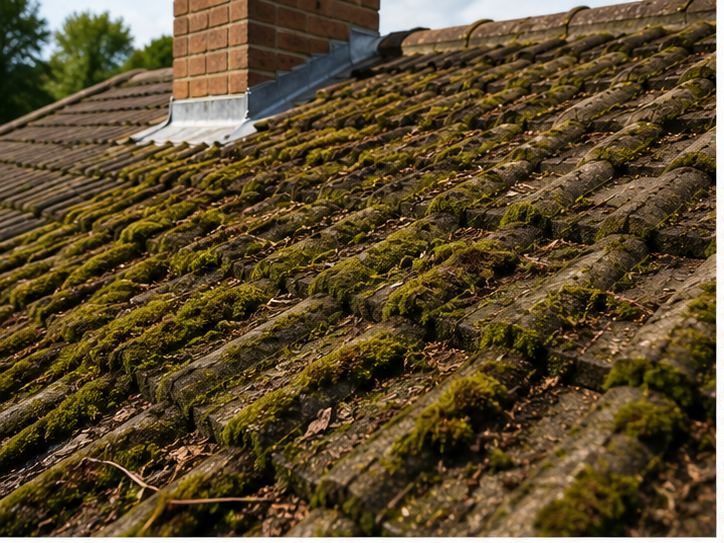
Trimming back overhanging branches, where they belong to the property and it's practical and safe to do so, is one of the most effective long-term steps a Warmley homeowner can realistically take. Less overhang means more light and airflow reaching the roof surface, and less leaf litter settling in valleys and against ridge lines, which is very often where fresh moss growth quietly starts before spreading further.
Keeping gutters clear plays a supporting role in this too, and it's often overlooked. A gutter clogged with leaves and old moss debris holds moisture against the roof edge for longer than it should, giving new spores a reliably damp environment in which to establish themselves. Regular gutter clearance, particularly on properties near mature trees, genuinely helps reduce that risk over the course of a year.
Some roofing treatments include a biocide application as part of the clean itself, which helps to slow the regrowth of moss and algae for a period afterwards, rather than simply removing what's already there and leaving the roof exactly as vulnerable as before. It's not a permanent fix by any means, since spores are carried by wind and birds and will always find their way onto a roof eventually, but it does buy genuinely meaningful time before growth becomes noticeable again to the eye.
How quickly moss returns also depends a great deal on the roof itself and its particular characteristics. Older, more porous tiles tend to attract regrowth faster than smoother modern materials do, and a north-facing pitch will generally need more frequent attention than a slope that gets plenty of direct sun through the day. This is worth keeping firmly in mind when deciding how often to have a particular roof checked over.
A periodic check, even just a simple visual look from the ground every year or so, makes it considerably easier to catch new growth early, while it's still a light surface clean rather than the kind of thick, established build-up that takes far longer to treat properly and carefully.
If you'd like advice on keeping moss from creeping back on your Warmley roof, or you'd simply like it checked over by someone who knows what to look for, get in touch with Brunel Roofing Bristol and we'll be glad to help. Even small, regular steps taken consistently tend to add up to a noticeably cleaner roof over several years compared with leaving a property entirely unattended between full cleans, and they're generally far cheaper than dealing with the consequences of neglect further down the line.
Get a Free Quote for Roof Cleaning in Warmley
Every roof is different — the fastest way to get an accurate answer is a quick chat with our team.