
Moss doesn't appear on a roof overnight, and it certainly doesn't appear at random. Once you understand what moss actually needs in order to grow and thrive, it becomes much clearer why some tiled roofs in Warmley end up thickly covered in it over time, while others just a few doors along stay relatively clear for years on end.
Moss is a simple, hardy plant that thrives on moisture, shade and a rough surface to cling onto. A roof slope that stays damp for long periods, whether that's because of limited sun exposure or overhanging branches close by, gives moss exactly the conditions it needs to establish itself and spread. North-facing pitches in particular tend to dry out far more slowly after rain than south-facing ones, and that lingering dampness is very often where the problem quietly begins.
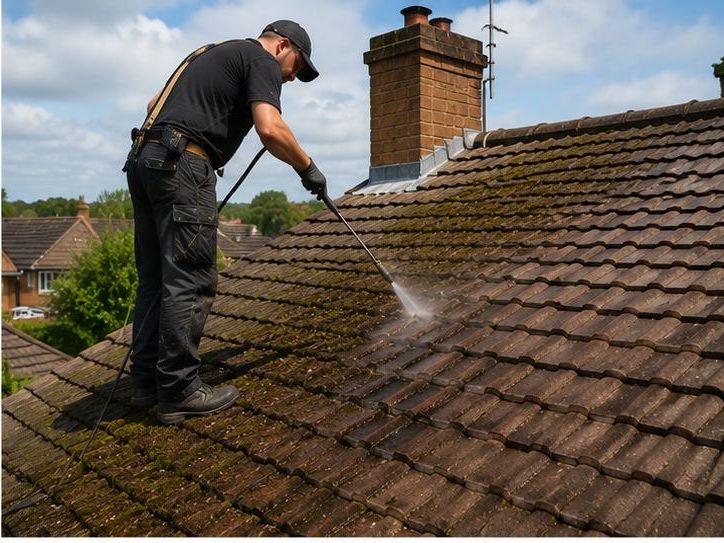
Warmley's mix of older housing and mature, leafy gardens means plenty of roofs sit partly in shade for much of the day, especially where trees overhang a rear slope, a side return, or a garage roof. Falling leaves and general organic debris add to the problem considerably, settling in valleys and against ridge tiles, giving moss spores both an easy foothold and a steady supply of nutrients to feed on as they establish themselves.
The type and age of the roof tile matters here too, more than many homeowners realise. Older concrete and clay tiles tend to have a slightly more porous, textured surface than newer manufactured materials, which gives moss spores something to grip onto far more easily than a smoother, newer tile would ever allow. That's one of the main reasons moss growth is often more noticeable and more persistent on established, older properties across Warmley.
Once moss gets a hold in one particular spot, it tends to spread outward from there rather than staying contained. It holds onto moisture rather like a sponge, which keeps the surrounding tiles damper for longer than they would otherwise be, creating precisely the conditions that let it expand further across the roof slope. Left unchecked over a few years, what started as a small, barely noticeable patch can quietly spread across an entire roof face.
It's not purely a cosmetic issue either, even though that's often what prompts a homeowner to first look into it. As moss spreads and thickens over successive seasons, it can gradually lift tile edges, trap water against the roof surface for longer than it should sit there, and eventually break apart and make its way toward the guttering, which is worth bearing in mind if your Warmley property already has visible moss building up on one or more slopes.
The good news is that understanding the underlying cause makes it far easier to deal with the problem properly, rather than simply treating the visible symptoms and hoping it doesn't come back. A soft-wash clean removes the existing growth gently and thoroughly, without the risk of tile damage that aggressive high-pressure washing can cause on an older, more weathered roof.
If moss has started to spread across your roof in Warmley and you're not entirely sure how far it's actually progressed, we're happy to come out, take a proper look, and talk you through exactly what we're seeing and what we'd recommend doing about it. It's also worth noting that neighbouring roofs in Warmley, even ones built at a similar time, can end up with quite different amounts of moss depending purely on which direction they face and how close nearby trees happen to be, which is why a one-size-fits-all approach to roof maintenance rarely works well in practice.
Get a Free Quote for Roof Cleaning in Warmley
Every roof is different — the fastest way to get an accurate answer is a quick chat with our team.