
Moss tends to get most of the attention, but algae and lichen are just as common on roofs across Eastville, and they establish for slightly different reasons. Understanding what's actually driving the growth on your particular roof helps explain why some slopes are affected and others stay clear.
Algae is generally the first coloniser, showing up as a black or dark green streaking, often running down from ridge tiles or ventilation points where moisture regularly flows. It thrives on damp, shaded surfaces and spreads quickly once established, which is why it's frequently seen before moss or lichen appear in the same spot.
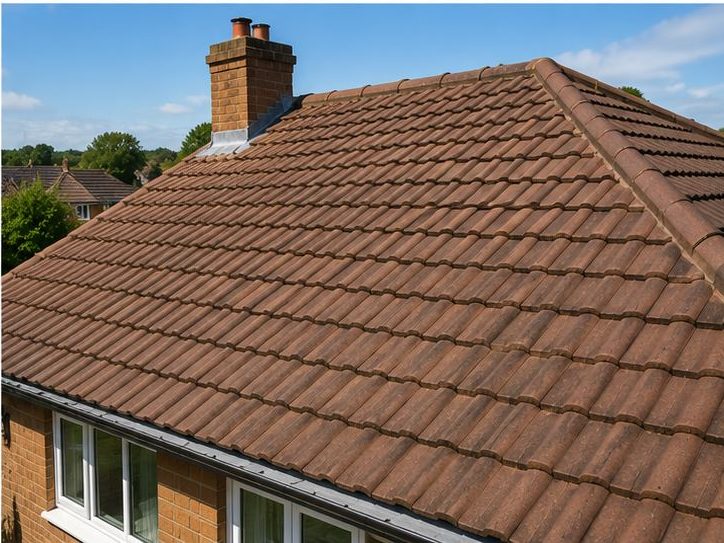
Lichen is a slower-growing but more stubborn presence - it appears as flat, crusty patches, often grey, yellow or pale green, and bonds quite firmly to the tile surface itself. Because it grows so slowly, lichen on a roof is usually a sign that a particular area has stayed undisturbed and consistently damp for a long period.
Shade is one of the biggest factors behind growth on Eastville roofs. Streets with mature trees, or properties overshadowed by taller neighbouring buildings, keep certain roof slopes out of direct sun for much of the day. Without regular drying from sunlight, moisture lingers on the tile surface for longer after rain, creating exactly the conditions algae and lichen need to take hold.
Tree cover adds a second layer to the problem beyond shade alone - falling leaves, seeds and organic debris settle on the roof and in the gutters, breaking down into a nutrient-rich layer that gives algae and moss spores something to feed on. Eastville's tree-lined residential roads mean a fair number of roofs deal with this combination of shade and organic debris together.
Roof orientation plays a part too. North and east-facing slopes generally receive less direct sunlight over the course of a day than south and west-facing ones, so it's common to see noticeably heavier growth on one side of a roof than the other, purely down to which way it faces rather than anything wrong with the tiles themselves.
The tile material itself also affects how readily algae and lichen take hold - porous or textured surfaces, and tiles that have weathered and roughened slightly with age, tend to give spores more to grip onto than smoother, newer tiles. This is part of why older roofs in Eastville often show more established growth than recently re-roofed properties nearby.
Local air quality and general environmental conditions can play a small supporting role too, though shade and moisture remain by far the biggest factors on most Eastville roofs. Roofs near busier roads sometimes show slightly different growth patterns to those on quieter residential streets, though this effect is generally minor compared with how much sun and rain exposure a particular slope gets. What matters most for any individual property is less about the wider area and more about that specific roof's shape, pitch, orientation and surroundings.
None of these causes are within a homeowner's control in any meaningful way, but understanding them helps explain why growth returns to certain spots and what a sensible cleaning and maintenance routine needs to account for. If algae or lichen has taken hold on your roof, Brunel Roofing Bristol can assess the cause as well as the cure and advise what's realistic going forward.
Get a Free Quote for Roof Cleaning in Eastville
Every roof is different — the fastest way to get an accurate answer is a quick chat with our team.