
As flat roofs age, it is common for leaks to begin appearing, and understanding the typical causes helps Lockleaze homeowners recognise what is happening and decide how best to respond. While every roof is different, the underlying reasons older flat roofs start leaking tend to fall into a fairly predictable set of patterns.
The most common cause is simply the ageing of the roof covering itself, particularly where the roof still has its original felt. Felt tends to become brittle over time as it is repeatedly exposed to UV light and seasonal temperature changes, and once it reaches this stage, cracks and splits can develop across the surface, allowing water through even without any obvious single point of failure.
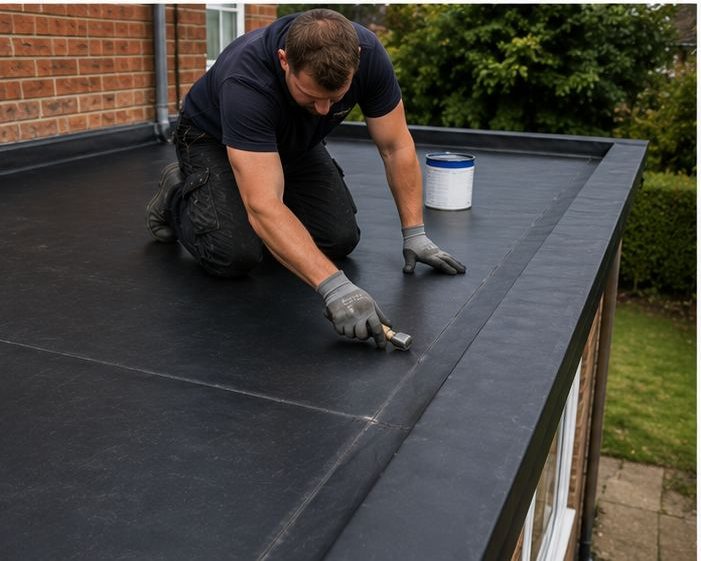
Seams and joints are another common weak point on older roofs, especially layered felt systems built up from multiple overlapping sheets. Over time, the adhesive or bonding at these seams can degrade, allowing them to lift slightly, and once a seam begins to open, it creates a direct route for water to get underneath the covering.
Junctions where the roof meets a wall, chimney or upstand are particularly prone to leaks developing with age. These areas rely on trims and detailing that can deteriorate faster than the flat expanse of the roof itself, and once the seal at a junction begins to fail, water can track in and travel some distance before showing itself as a stain on a ceiling well away from the actual point of entry.
Drainage problems often contribute to leaks developing over time as well. Where a roof has inadequate fall, or where outlets have become blocked with debris, water is left sitting on the surface for longer than it should, and this prolonged exposure accelerates wear at seams, trims and any existing weak spots, gradually turning a minor imperfection into an active leak.
It is also worth being aware that by the time a leak becomes visible inside the property, the underlying covering has often already been compromised for some time. Water can travel along the roof deck or structure before finding a route down into a room, meaning the visible damp patch is not always directly above the actual point of failure.
Physical damage is another, less common but still relevant cause, particularly on Lockleaze properties with overhanging trees or nearby structures. A fallen branch, debris blown across the roof in high winds, or even accidental damage from maintenance work elsewhere on the property can create a small puncture that then behaves much like an ageing seam, gradually letting water through until it becomes noticeable indoors.
Because of this, older flat roofs in Lockleaze that begin leaking are worth having properly assessed rather than simply patched at the visible symptom, since the true cause, whether ageing material, failed seams, junction detailing or drainage, needs to be identified to fix the problem properly rather than temporarily. Brunel Roofing Bristol can inspect an ageing flat roof, trace the real source of a leak, and advise honestly on whether a repair or a full EPDM replacement is the right way forward.
Get a Free Quote for EPDM Roofing in Lockleaze
Every roof is different — the fastest way to get an accurate answer is a quick chat with our team.