
Edge lifting is one of the more visible warning signs that something is wrong on a flat roof, and it is a concern that comes up periodically among Filton homeowners inspecting their roof coverings, whether felt, GRP or EPDM. Understanding what typically causes this kind of lifting helps in deciding whether it is a minor issue to monitor or a more pressing problem that needs prompt attention.
The most common cause is a failure in the bond between the membrane and the substrate beneath it, often at the perimeter trim or drip edge where the covering is dressed over the edge of the roof deck. This bond can weaken over time due to age, exposure to repeated expansion and contraction as temperatures fluctuate, or simply because the original adhesive application at that specific point was not sufficient to hold firm over the long term.
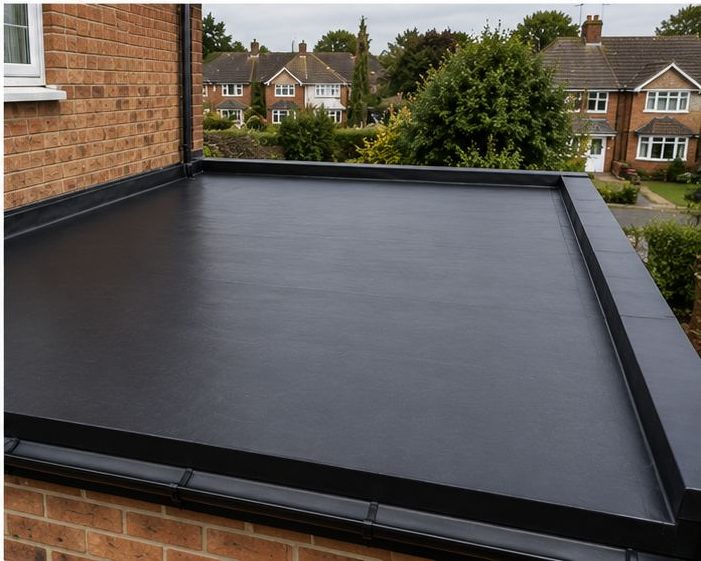
Wind uplift is another significant factor, particularly for Filton properties in more exposed locations. Flat roofs experience a genuine aerodynamic force during strong winds, and the edges and corners of a roof are subjected to the greatest uplift pressure of any part of the covering. If the edge detailing was not installed with adequate mechanical fixing or a robust enough adhesive bond to resist this pressure, repeated exposure to strong gusts can gradually work the membrane loose at the perimeter.
Trapped moisture beneath the membrane can also cause lifting, sometimes visible as a bubble or blister near the edge rather than a clean peel. If moisture becomes trapped between the membrane and the deck, perhaps from residual dampness present at the time of installation or from a small breach elsewhere allowing water to track underneath, changes in temperature can cause that trapped moisture to expand and contract, gradually working the covering loose from the substrate.
The quality of the original edge detailing itself plays a significant role too. Correctly finished edges typically involve a combination of adhesive bonding and mechanical fixing with a termination bar or edge trim, dressed and sealed to shed water effectively. If this detailing was rushed or under-specified during the original installation, whatever the covering material, the edges are simply more vulnerable to gradually working loose over time regardless of the quality of the membrane itself.
Left unaddressed, edge lifting tends to get progressively worse rather than better, since once wind or water finds a way underneath a loose section, the problem area typically expands. It also creates an obvious entry point for water to reach the roof deck beneath, risking the kind of decking damage that turns a straightforward edge repair into a larger project if left too long.
The type of covering also affects how edge lifting presents and how it is best resolved. On an EPDM roof, a lifted edge is generally a case of re-bonding and, where needed, adding mechanical fixing at the specific point of failure. On an older felt roof, lifting at the edge often signals that the material has become brittle more generally, in which case a like-for-like repair may only be a short-term measure rather than a lasting fix.
If you have noticed lifting at the edges of a flat roof in Filton, it is worth having it looked at promptly rather than waiting to see whether it worsens. Brunel Roofing Bristol can assess the cause, whether it is a bonding failure, wind exposure, trapped moisture or an original detailing issue, and carry out the appropriate repair to secure the membrane properly.
Get a Free Quote for EPDM Roofing in Filton
Every roof is different — the fastest way to get an accurate answer is a quick chat with our team.