
Green growth on a roof is rarely just one thing. Moss, algae and lichen are all common on tiled and slate roofs across Hillfields, and while they can look similar from the pavement, they behave quite differently and tend to point to slightly different underlying conditions, which is worth understanding before assuming every patch of green needs the same treatment.
Moisture is the common thread behind almost all of it. Roof surfaces that stay damp for longer periods, either because they dry slowly or because they are shaded for large parts of the day, give moss spores and algae a much better chance to establish. Given how many Hillfields terraces sit close together, with roofs that shade one another depending on the time of day, it is very common for one slope of a roof to be noticeably greener than the other simply because of how the sun reaches it through the seasons.
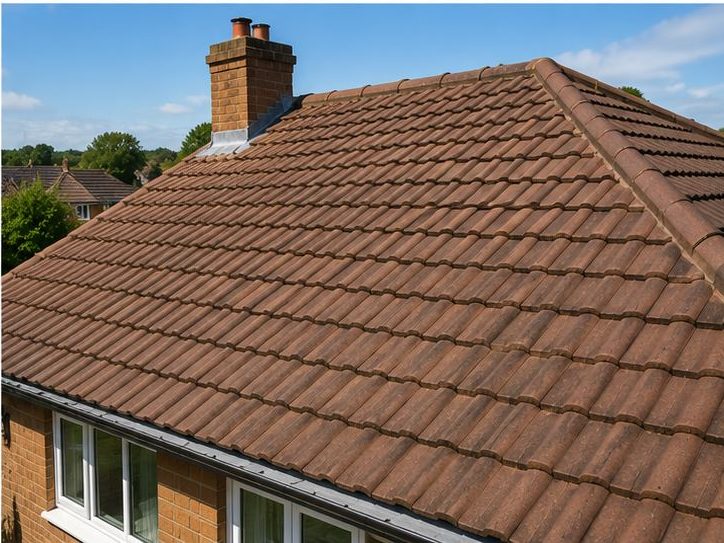
Trees play a big part too. Overhanging branches drop leaves, twigs and organic debris onto roof surfaces, all of which retain moisture and provide a foothold for growth to take hold. Even trees that are not directly overhanging a roof can still contribute, since airborne spores travel easily and tend to settle wherever conditions are favourable, which is often the shaded, north-facing slopes found on many Hillfields properties backing onto gardens.
The roofing material itself has an influence as well. Textured concrete tiles, which are common across the area alongside older slate, tend to have a slightly porous surface that gives moss and algae more to grip onto compared with a smoother material. Age plays a role here too, since tiles that have weathered for decades develop a rougher surface than when they were new, making them more hospitable to growth over time, and it is unusual to find an older Hillfields roof with no growth at all.
Poor airflow around a roof can also contribute. Properties with dense planting close to the house, or terraces where roofs are tightly packed with limited gaps between them, tend to hold onto moisture longer after rain than more exposed roofs, which again gives green growth more time to establish itself before drying conditions have a chance to slow it down.
It is also worth noting that a small amount of lichen or algae staining is extremely common and not necessarily a sign of a problem. It becomes more of a concern when moss forms thick, cushion-like clumps, since that is when it starts holding moisture against the tile surface and creating the conditions for other issues, including gutter blockages and, in some cases, tile deterioration underneath that is not immediately obvious.
Understanding what is driving the growth on a particular roof, whether that is tree cover, shading from neighbouring buildings, or the tile material itself, helps determine both how urgently it needs treating and how likely it is to come back afterwards, which in turn shapes a sensible ongoing maintenance routine.
Roof pitch plays a role too, and it is worth mentioning alongside the other factors. Shallower slopes shed water more slowly than steep ones, which gives moisture more time to sit on the tile surface and encourage growth, and a good number of the older Hillfields terraces have roof pitches that fall into this more moisture-retentive range compared with steeper modern designs.
If you are seeing green growth spreading across your roof in Hillfields and want to understand what is behind it, Brunel Roofing Bristol can take a proper look and advise on the best way forward.
Get a Free Quote for Roof Cleaning in Hillfields
Every roof is different — the fastest way to get an accurate answer is a quick chat with our team.