
Once the old tiles or slates have been taken off a roof in Redcliffe, the structure underneath is briefly on show for the first time in decades. This is a useful moment for the roofing team, because rafters, purlins and any old boarding become fully visible rather than being hidden under coverings that may have masked problems for years. It is also a vulnerable point in the job, since the roof has no weatherproof layer until new membrane goes down.
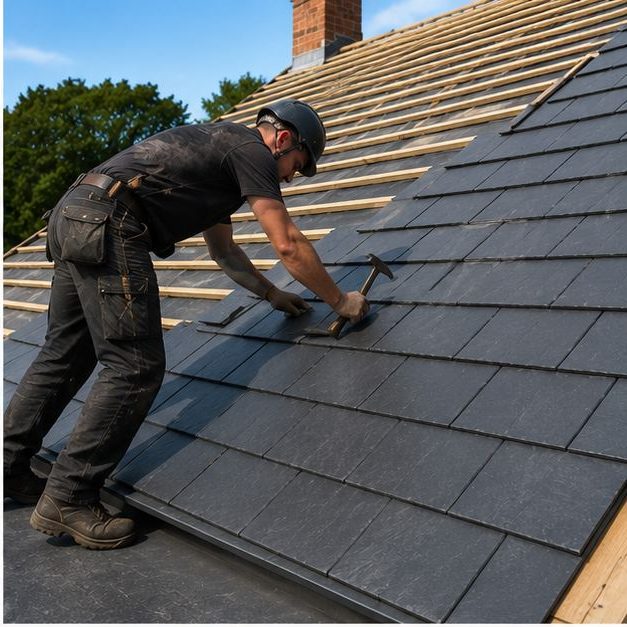
For this reason, work is generally sequenced so that only the area being actively worked on is left uncovered, particularly given how quickly weather can turn near the Floating Harbour. If a section cannot be completed and covered with new membrane before the end of the working day, temporary waterproof sheeting is fitted to protect the exposed timbers overnight. This matters just as much on a converted warehouse roof as it does on a traditional terrace, since both can suffer lasting damage from even a short spell of unprotected rain.
With the old covering gone, the team can also check details that were previously hidden, such as the condition of timber around chimney stacks, party walls and any old lead flashing. On a property in a historic part of Redcliffe, this stage sometimes reveals older repairs or non-standard construction methods that need to be accounted for before new materials go on, which is one reason a full strip-and-replace often shows up issues that a simple repair never would.
Any debris, dust or loose material left from the strip is cleared from the roof timbers before the next stage begins, giving a clean surface for the new membrane and battens. This short window between removal and re-covering is really about confirming the roof is ready to receive its new system properly, rather than building on top of anything doubtful.
It is also the point at which the original specification is confirmed or adjusted. A roofer might find, for example, that the roof pitch is slightly different to what old drawings suggested, or that a section of boarding under old slates needs replacing before new membrane can be laid flat. On flats and apartment conversions in Redcliffe that were themselves built on top of older structures, this stage sometimes throws up small surprises that simply could not be seen or measured from ground level or from inside the loft space beforehand. Rather than causing delay, catching these details now means the rest of the installation can proceed without having to double back later.
Photographs are often taken of the exposed structure at this point too, partly as a record for the homeowner and partly so that anything unusual, such as an old service run or a redundant chimney breast, is properly noted before it disappears under new materials for good.
Getting this stage right protects everything that follows, which is why Brunel Roofing Bristol treats it as a proper checkpoint rather than a quick pause between jobs. If you are planning a re-roof in Redcliffe and want to understand how your own roof will be handled at this point, we are happy to talk it through and provide a quote.
Get a Free Quote for New Roof Installations in Redcliffe
Every roof is different — the fastest way to get an accurate answer is a quick chat with our team.