
Chimneys and roof valleys are two of the most vulnerable points on any pitched roof, and on the larger, often period properties found around The Downs, both features tend to be more prominent and more numerous than on a simple modern roof. Checking them properly during cleaning is essential, not optional.
A roof valley, formed where two sloping sections meet, is designed to channel rainwater efficiently down to the guttering, but it is also a natural collection point for leaves, moss fragments, and general debris blown across from The Downs and surrounding gardens. Left to accumulate, this material can trap moisture directly against the valley lining, and it becomes very difficult to judge whether that lining is still sound underneath the build-up.
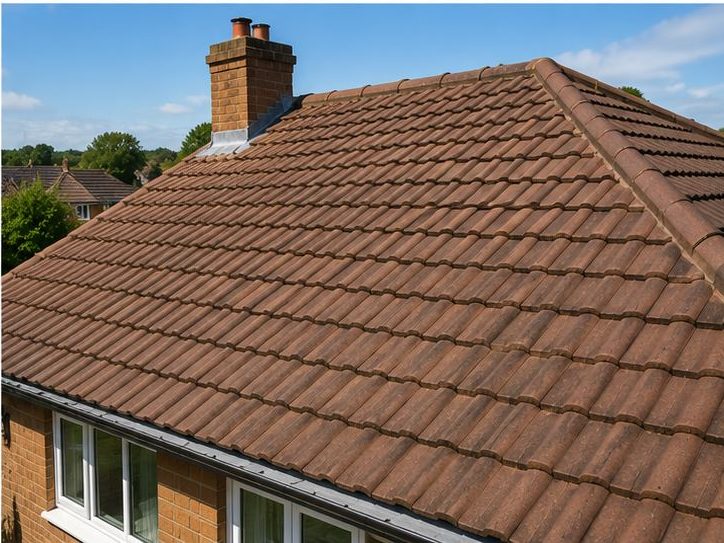
During cleaning, we clear valleys thoroughly and take the opportunity to check the lining and surrounding tiles for any signs of wear, cracking, or displacement, since a compromised valley can allow water to track sideways under the roof covering rather than draining away as intended.
We also check how well each valley is actually performing under real conditions rather than assuming it matches the original design, since decades of minor settlement can shift how water drains across an older roofline. A valley that has developed even a slight dip can start holding standing water after rain, which accelerates both moss growth and material wear in that specific spot.
Chimneys present their own set of checks. The flashing at the base of a chimney stack is a common source of leaks on older properties, and moss combined with trapped debris often collects right at this junction. Clearing this area allows us to see whether the flashing is still properly sealed, or whether it has begun to lift, crack, or corrode after years of exposure.
Beyond the flashing itself, we also look at the general condition of the chimney stack while working nearby, since mortar pointing between bricks can weather over time in much the same way as roof mortar, and a stack in poor repair can become its own source of water ingress into the roof space.
For substantial properties around The Downs, many of which have multiple valleys and imposing chimney stacks as part of their original architecture, this level of attention during cleaning is what turns the job from a purely cosmetic exercise into a genuinely useful health check for the roof as a whole.
On properties with more than one valley or chimney, which is common among the larger homes around The Downs, each one is checked individually rather than assumed to share the same condition, since exposure, age of repair work, and material can all vary from one feature to another even on the same roof. Where previous repair work is visible around a chimney or valley, we also take note of how well it has held up, since a patch or repointing job carried out some years ago can itself begin to weather and may need revisiting even if the original problem it addressed has not returned. Bringing this all together under one visit, rather than treating the roof, valleys, and chimneys as separate concerns handled by different tradespeople at different times, tends to give a more coherent and cost-effective picture of a property's overall roof health.
If your property near The Downs has chimneys or valleys that have not been checked in some time, having the roof professionally cleaned is a sensible way to get a proper look at both. Get in touch with Brunel Roofing Bristol to arrange a visit.
Get a Free Quote for Roof Cleaning in The Downs
Every roof is different — the fastest way to get an accurate answer is a quick chat with our team.