
Properties around The Downs enjoy one of Bristol's most attractive settings, with open green space nearby and often mature planting close to the buildings themselves. That same setting, however, contributes to conditions that can encourage moss, algae, and lichen to establish on roofs in the area more readily than in some other parts of the city.
Proximity to open parkland means many roofs around The Downs are exposed to prevailing winds carrying airborne moss spores and organic material, which settle across tile surfaces over time. Combined with nearby mature trees on many streets and gardens bordering the green space, there is often a steady supply of leaf litter and debris landing on roofs too, particularly during autumn.
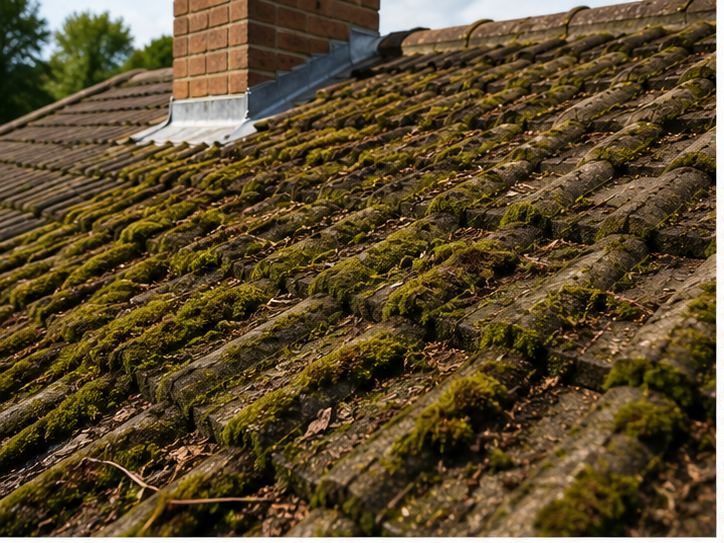
Shaded roof slopes are a significant factor as well. Larger, often period properties around The Downs frequently have complex rooflines with multiple aspects, and north-facing or tree-shaded sections can stay damp for considerably longer after rain than sections that get direct sun through the day. That prolonged dampness is precisely the condition moss needs to establish and spread.
Larger, often multi-aspect rooflines around The Downs mean a single property can experience quite different growing conditions across its own roof, with a sun-drenched south-facing slope staying almost clear while a shaded rear section a few metres away carries noticeably heavier moss. This variation within one property is common enough that we always assess every slope individually rather than judging the whole roof from a single visible aspect.
The generally damp, mild climate typical of Bristol adds to this picture, since frequent rainfall without long dry spells in between gives moss less opportunity to dry out and more opportunity to keep growing steadily across the roof surface. Over several years, this can lead to fairly established growth on roofs that have not had recent attention.
Older roof coverings, common on many of the substantial properties surrounding The Downs, can also be somewhat more porous or textured than modern materials, giving spores an easier surface to grip onto in the early stages of growth. This is one of several reasons why more established properties in this area often show heavier moss coverage than newer housing elsewhere.
None of this means moss is unavoidable, it simply means roofs in this setting benefit from periodic professional attention. A gentle soft-wash clean removes existing growth without the risks that aggressive pressure washing poses to older or more delicate roof coverings, restoring the roof without unnecessary damage.
It is also worth noting that elevation and exposure around The Downs can vary quite a bit from one street to the next, and properties on more sheltered stretches may show noticeably less growth than those directly facing open parkland and prevailing wind. This kind of local variation is exactly why a proper look at the individual roof, rather than a general assumption about the wider area, gives the most useful picture. Boundary walls, hedging, and taller neighbouring buildings around some of the streets bordering The Downs can also create localised pockets of shade and reduced airflow that behave quite differently to the open aspect the parkland itself might suggest, which is another reason each property's roof needs assessing on its own terms.
If your property near The Downs has developed visible moss or algae staining, we would be glad to take a look and advise on the right approach. Contact Brunel Roofing Bristol to arrange an assessment.
Get a Free Quote for Roof Cleaning in The Downs
Every roof is different — the fastest way to get an accurate answer is a quick chat with our team.